 ChipApex | Global Electronic Components Supplier
SEARCH
Search Product
Search Post
— IC芯片 | 连接器 | 传感器 | 被动器件 —
Search productSearch post
— IC芯片 | 连接器 | 传感器 | 被动器件 —
Consult the customer manager about the wholesale price.
consultation hotline:86-132-6715-2157
email:[email protected]
Contact the product manager for consultation. One-stop consultation is available.
Do you want a lower wholesale price? Please send us your inquiry and we will reply immediately.
The STPM11ATR is a single-phase energy metering integrated circuit designed for effective measurement of active energy in power line systems. It utilizes Rogowski coils, current transformers, or shunt sensors as input sources. The device architecture comprises an analog section with preamplifiers and sigma-delta A/D converters, alongside a digital section featuring a hard-wired DSP and system control. Calibration and configuration are managed via OTP cells programmed through a serial interface. The unit computes consumed active energy from sigma-delta output signals and provides a ripple-free pulsed output proportional to energy, directly driving a stepper counter for simple meter implementations.
Verify the specific suffix 'ATR' against official STMicroelectronics documentation to confirm package type and tape-and-reel specifications. Ensure compatibility with existing calibration profiles and OTP programming requirements. Cross-reference the datasheet revision date to confirm support for required IEC standards and sensor types before procurement.
Select this component when designing single-phase meters requiring direct stepper motor drive capabilities. It is suitable for applications utilizing Rogowski coils, current transformers, or shunts. Consider the integrated VREG and DSP architecture if minimizing external active components is a priority. Verify that one-point calibration meets the accuracy requirements for the target application range.
The STPM11 belongs to the STPM1x family of energy metering ICs. This family is engineered to provide complete functionality for single-phase energy measurement without additional active components. The series includes variants supporting different oscillator types and monitoring features, such as live and neutral detection found in higher-end models like the STPM13/14.
Check for STPM10 or STPM12 equivalents if reactive/apparent energy measurement or crystal oscillators are required. Verify pinout and software compatibility if substituting within the STPM1x family.
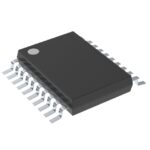 STPM11ATR
The activity of extra discounts on wholesale prices is in full swing…
Please fill in your contact information and we will send you the latest wholesale price list.





