 ChipApex | Global Electronic Components Supplier
SEARCH
Search Product
Search Post
— IC芯片 | 连接器 | 传感器 | 被动器件 —
Search productSearch post
— IC芯片 | 连接器 | 传感器 | 被动器件 —
Consult the customer manager about the wholesale price.
consultation hotline:86-132-6715-2157
email:[email protected]
Contact the product manager for consultation. One-stop consultation is available.
Do you want a lower wholesale price? Please send us your inquiry and we will reply immediately.
The STSPIN948TR is a scalable dual full-bridge driver for brushed DC motors or bipolar stepper motors, manufactured by STMicroelectronics. It delivers a maximum output current of 4.5 A RMS with an operating voltage up to 58 V. The device features a typical RDS(ON) of 0.36 Ω and supports switching frequencies up to 500 kHz. It operates within an ambient temperature range of -40 °C to +85 °C and is housed in a VFQFPN-48 surface-mount package.
Verify the specific ordering suffix to confirm the tape and reel packaging configuration required for automated assembly processes. Ensure that the procurement channel provides valid traceability documentation consistent with manufacturer standards. Confirm that the component lot date aligns with project timelines to avoid obsolescence risks associated with long lead times. Validate that the received units match the exact part number designation without unauthorized substitutions.
Select this component when designing high-current motor control applications requiring precise duty-cycle PWM control. The integrated current sensing amplifiers simplify external circuitry compared to discrete solutions. Consider the adjustable slew rate feature if electromagnetic compatibility is a critical design constraint. Evaluate the thermal performance requirements against the specified junction temperature limits for the intended enclosure environment.
This part belongs to the STSPIN9 series of scalable high-current drivers targeting industrial and professional appliances. It complements other variants like the STSPIN958, which offers higher current capacity. The series shares common architectural features such as flexible driving methods and robust protection mechanisms, providing designers with a modular platform for various motor drive power levels.
The STSPIN958 serves as a direct functional substitute within the same product family, offering increased current capability. Designers must verify that the system's thermal management and power supply can accommodate the differences in on-resistance and current ratings between these two devices.
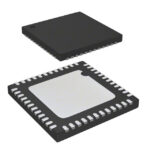 STSPIN948TR
The activity of extra discounts on wholesale prices is in full swing…
Please fill in your contact information and we will send you the latest wholesale price list.





