ChipApex | Global Electronic Components Supplier
SEARCH
Search Product
Search Post
— IC芯片 | 连接器 | 传感器 | 被动器件 —
Search productSearch post
— IC芯片 | 连接器 | 传感器 | 被动器件 —
Consult the customer manager about the wholesale price.
consultation hotline:86-132-6715-2157
email:[email protected]
Contact the product manager for consultation. One-stop consultation is available.
Do you want a lower wholesale price? Please send us your inquiry and we will reply immediately.
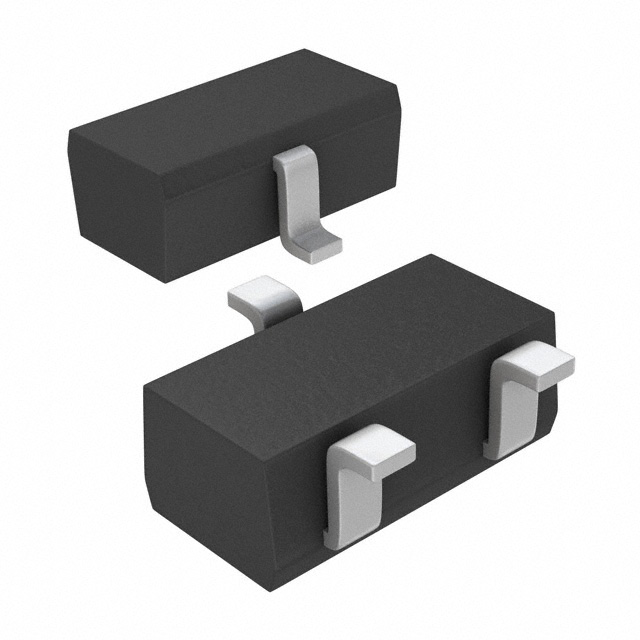
The STZ5.6NT146 is a low capacitance Zener diode manufactured by Rohm Semiconductor, designed for high-reliability applications including automotive electronics. It operates with a nominal Zener voltage of 5.6V and features a typical power dissipation rating of 200mW. The component is housed in an SMD3 package, specifically the SOT-346 form factor, which measures approximately 2.8x2.9mm with a thickness of 1.3mm. It supports AEC-Q101 standards for automotive qualification. The device utilizes a common cathode configuration with three terminals and is supplied in tape-and-reel packaging with a standard unit quantity of 3000 units per reel.
Verify the specific ordering suffix to ensure the correct packaging format matches production requirements. Confirm that the supply status aligns with long-term availability needs, as certain automotive-grade components may have restricted new design recommendations. Cross-reference the datasheet revision date to ensure compatibility with current manufacturing processes and regulatory compliance standards.
Select this component when a low-profile, automotive-qualified Zener diode with low capacitance is required. Ensure the circuit design accommodates the 200mW power dissipation limit under expected thermal conditions. Verify that the SOT-346 footprint matches the PCB layout constraints and that the 5.6V breakdown voltage aligns with the target clamping or reference voltage specifications.
This part belongs to Rohm's STZ series of low capacitance Zener diodes, which are engineered for robust performance in demanding environments. The series is characterized by its small outline packages and adherence to automotive quality standards, making it suitable for integration into vehicle control units and infotainment systems where space and reliability are critical factors.
The SST5.6NFH is listed as a similar specification alternative within the same product family. Both parts share comparable electrical characteristics and package types. Verify pinout compatibility and exact voltage tolerances before substituting to ensure seamless integration into existing designs without requiring schematic modifications.
 STZ5.6NT146
The activity of extra discounts on wholesale prices is in full swing…
Please fill in your contact information and we will send you the latest wholesale price list.