 ChipApex | Global Electronic Components Supplier
SEARCH
Search Product
Search Post
— IC芯片 | 连接器 | 传感器 | 被动器件 —
Search productSearch post
— IC芯片 | 连接器 | 传感器 | 被动器件 —
Consult the customer manager about the wholesale price.
consultation hotline:86-132-6715-2157
email:[email protected]
Contact the product manager for consultation. One-stop consultation is available.
Do you want a lower wholesale price? Please send us your inquiry and we will reply immediately.
The SW06GS is a quad single-pole, single-throw (SPST) analog switch manufactured by Analog Devices Inc. It employs bipolar and ion-implanted JFET devices with TTL/CMOS compatible logic inputs. The device operates on dual or single power supplies ranging from ±12 V to ±18 V, supporting analog signals up to +32 V in single-supply mode. Key electrical specifications include a maximum on-resistance of 150 Ω, guaranteed switching speeds with turn-on times up to 700 ns and turn-off times up to 500 ns, and low leakage currents. It features a 16-pin Small Outline Leadless (SOL) package and operates within a temperature range of -40°C to +85°C.
Verify the specific suffix 'GS' corresponds to the 16-pin SOL package and the commercial temperature grade (-40°C to +85°C). Confirm that the ordering information matches the manufacturer's current datasheet revision, as legacy part numbers may have updated packaging or qualification standards. Ensure compatibility with existing PCB footprints for the R-16/SOL-16 outline dimensions.
Select this component when high static discharge protection and radiation hardness are required, as its bipolar inputs exceed CMOS immunity levels. It is suitable for applications needing configurable NO/NC channels and single-supply operation up to 36 V. Consider the 150 Ω maximum on-resistance and 700 ns switching speed limits against system requirements for signal integrity and timing constraints.
The SW06 series includes variants such as SW06BQ, SW06FQ, and SW06GP, which differ primarily in operating temperature ranges and package types. The SW06GS specifically denotes the commercial grade version housed in a 16-pin SOL package. This family is pin-compatible with older LF-11333/13333 devices, facilitating direct upgrades in existing designs while offering improved electrical specifications.
The SW06GS is pin-compatible with the LF-11333 and LF-13333 devices. Designers upgrading from these legacy parts should verify that the new on-resistance and leakage characteristics meet the original circuit tolerances. No functional changes are expected due to the identical pinout and logical configuration.
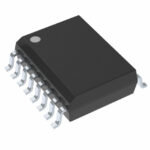 SW06GS
The activity of extra discounts on wholesale prices is in full swing…
Please fill in your contact information and we will send you the latest wholesale price list.





