 ChipApex | Global Electronic Components Supplier
SEARCH
Search Product
Search Post
— IC芯片 | 连接器 | 传感器 | 被动器件 —
Search productSearch post
— IC芯片 | 连接器 | 传感器 | 被动器件 —
Consult the customer manager about the wholesale price.
consultation hotline:86-132-6715-2157
email:[email protected]
Contact the product manager for consultation. One-stop consultation is available.
Do you want a lower wholesale price? Please send us your inquiry and we will reply immediately.
The SY100EP196VTG is a programmable delay line manufactured by Microchip Technology, housed in a 32-lead TQFP package. It supports PECL and NECL logic standards with operating supply voltages of 3.0V to 5.5V or -3.0V to -5.5V respectively. The device provides a programmable delay range from approximately 2.2ns to 12.2ns using a 10-bit digital control register, offering increments of about 10ps. An additional FTUNE pin allows for continuous fine-tuning of the delay within a 30ps range. The maximum operating frequency exceeds 2.5GHz.
Verify that the ordering suffix 'TG' corresponds to the industrial temperature range (-40°C to +85°C) and the TQFP-32 package type as defined in the official datasheet. Confirm RoHS compliance status through the manufacturer's current documentation before procurement.
Select this component when interfacing with high-speed ECL-based clock distribution networks requiring precise timing alignment. Ensure the system power supply matches the required PECL or NECL configuration. Verify that the control interface logic levels are compatible with the VCF and VEF pin settings.
This part belongs to the SY100EP196V family of programmable delay chips designed for high-frequency applications. It serves as a direct replacement for the Micrel SY100EP196V and maintains compatibility with the onsemi MC100EP196 series for design continuity.
Public confirmed substitutes include SY100EP196VTI and SY100EP196VTITR. These parts share identical functionality but differ in packaging format (Tube vs. Tape and Reel).
The FTUNE pin allows for continuous variation of the delay by approximately ±15ps. Adjusting the voltage at this pin enables fine-tuning beyond the discrete steps provided by the digital control register.
Yes, an eleventh control bit and dedicated CASCADE outputs allow multiple devices to be cascaded. Each additional device effectively doubles the available delay range.
The D inputs can accept PECL, CMOS, or TTL level signals. The logic threshold is configured by connecting the VCF and VEF pins appropriately.
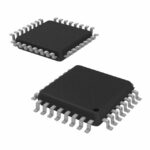 SY100EP196VTG
The activity of extra discounts on wholesale prices is in full swing…
Please fill in your contact information and we will send you the latest wholesale price list.





