 ChipApex | Global Electronic Components Supplier
SEARCH
Search Product
Search Post
— IC芯片 | 连接器 | 传感器 | 被动器件 —
Search productSearch post
— IC芯片 | 连接器 | 传感器 | 被动器件 —
Consult the customer manager about the wholesale price.
consultation hotline:86-132-6715-2157
email:[email protected]
Contact the product manager for consultation. One-stop consultation is available.
Do you want a lower wholesale price? Please send us your inquiry and we will reply immediately.
The SY10EL16VCKG-TR is a high-speed differential receiver manufactured by Microchip Technology, belonging to the 10EL logic family. It operates on a single supply voltage ranging from 3 V to 5.5 V and supports both PECL and LVDS input/output configurations. The device is housed in an 8-lead MSOP package with exposed pad for enhanced thermal performance. Designed for signal integrity in high-frequency applications, it features low propagation delay and jitter characteristics suitable for data communication systems.
Verify component authenticity through authorized Microchip distributors or direct channels. Confirm RoHS compliance status via official datasheets as environmental declarations may vary by production batch. Check current lifecycle status as this specific part number indicates end-of-life or not recommended for new designs in some regions. Ensure proper ESD handling procedures during storage and assembly due to moisture sensitivity classification.
Select this component when designing systems requiring robust differential reception with flexible voltage compatibility. Consider the MSOP package constraints regarding PCB space and thermal management requirements. Evaluate signal integrity needs against the specified propagation delay and jitter parameters. Verify that the operating temperature range meets the environmental conditions of the target application without requiring additional cooling solutions.
This device belongs to Microchip's 10EL series of high-speed ECL-compatible logic components. The series focuses on providing reliable performance in demanding digital environments. The SY10EL16 variant specifically addresses the need for versatile input/output compatibility in modern mixed-signal systems. It represents a transition point between traditional ECL performance and lower voltage CMOS compatibility.
Publicly confirmed substitute part numbers are not available in the provided documentation. Consult Microchip technical support for current equivalent recommendations given the potential end-of-life status.
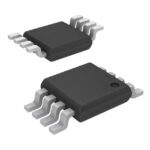 SY10EL16VCKG-TR
The activity of extra discounts on wholesale prices is in full swing…
Please fill in your contact information and we will send you the latest wholesale price list.






