 ChipApex | Global Electronic Components Supplier
SEARCH
Search Product
Search Post
— IC芯片 | 连接器 | 传感器 | 被动器件 —
Search productSearch post
— IC芯片 | 连接器 | 传感器 | 被动器件 —
Consult the customer manager about the wholesale price.
consultation hotline:86-132-6715-2157
email:[email protected]
Contact the product manager for consultation. One-stop consultation is available.
Do you want a lower wholesale price? Please send us your inquiry and we will reply immediately.
The SY88933VKI is a low-power limiting post amplifier designed for fiber-optic receivers. It operates from a single +3.3V or +5V power supply and supports data rates up to 1.25Gbps. The device features a high-sensitivity input capable of amplifying signals as small as 5mVp-p, providing typically 38dB differential voltage gain. It outputs PECL level waveforms and includes a TTL signal detect output with programmable sensitivity.
Verify the industrial temperature range (-40°C to +85°C) matches your operational requirements. Confirm the MSOP-10 package dimensions align with your PCB layout constraints. Ensure the datasheet revision corresponds to the specific manufacturing lot for accurate electrical characteristics. Cross-reference the ordering suffix 'I' to confirm industrial grade specifications before finalizing procurement.
Select this component when interfacing transimpedance amplifiers with PECL inputs in optical networking environments. The device is suitable for designs requiring a single power supply operation between 3.0V and 5.5V. Consider the 1GHz bandwidth and 38dB gain for high-speed signal conditioning. Evaluate the programmable signal detect threshold if loss-of-signal monitoring is required for system stability.
This part belongs to the SY88933V series of limiting post amplifiers manufactured by Microchip Technology (formerly Micrel). It is specifically engineered for use in fiber-optic receivers where noise quantization and signal restoration are critical. The device connects directly to typical transimpedance amplifiers to process linear signal outputs containing significant noise.
SY88933VKC: Commercial temperature variant with identical electrical specifications.
The signal detect threshold is set using the SDLVL pin. Connecting an external resistor between VCC and SDLVL creates a voltage divider with the internal VREF, allowing programmable sensitivity for input amplitude detection.
The EN pin is a TTL input that enables the true data output when asserted high. Deasserting the EN pin disables the output signal while leaving the input signal path active, which helps maintain stability during loss of signal conditions.
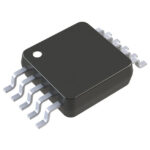 SY88933VKI
The activity of extra discounts on wholesale prices is in full swing…
Please fill in your contact information and we will send you the latest wholesale price list.






