 ChipApex | Global Electronic Components Supplier
SEARCH
Search Product
Search Post
— IC芯片 | 连接器 | 传感器 | 被动器件 —
Search productSearch post
— IC芯片 | 连接器 | 传感器 | 被动器件 —
Consult the customer manager about the wholesale price.
consultation hotline:86-132-6715-2157
email:[email protected]
Contact the product manager for consultation. One-stop consultation is available.
Do you want a lower wholesale price? Please send us your inquiry and we will reply immediately.
The SY89546UMI is a high-speed differential multiplexer from the Precision Edge family, manufactured by Microchip Technology. It operates on a single 2.5V supply and supports data rates up to 3.2Gbps. The device features a 4:1 multiplexing architecture with a 1:2 fanout capability, providing two copies of the selected input signal. It utilizes LVDS outputs with a typical swing of 350mV. The component is housed in a 32-pin MLF package measuring 5mm x 5mm and is rated for industrial temperatures ranging from -40°C to +85°C.
Verify that the specific ordering suffix matches the required lead finish and packaging format. The 'MI' suffix indicates an MLF-32 package with Sn-Pb lead finish. Confirm RoHS compliance requirements against the datasheet notes regarding Pb-Free alternatives if necessary. Ensure the procurement channel provides valid traceability documentation for the industrial temperature grade components.
Select this component when a 2.5V supply voltage is available and dual output signals are required from a single multiplexer source. Consider the SY89547L if a 3.3V supply is mandatory instead. Choose the SY89544U or SY89545L if only a single differential output is needed rather than the dual fanout provided here. Verify interface compatibility with LVDS, LVPECL, or CML standards.
This part belongs to Micrel's Precision Edge product family, now under Microchip Technology. It is designed for high-speed digital signal routing where low jitter and precise timing are critical. The device integrates internal termination networks to simplify board layout by eliminating external resistor-bias requirements for standard differential signaling interfaces.
SY89547LMG
Unused differential input pairs should be terminated by connecting one input to VCC and the complementary input to GND through a 1kΩ resistor. In this configuration, the corresponding VT pin must be left open.
The VT pins provide access to the center-tap of the internal termination network for each differential input pair, allowing flexibility for both AC-coupled and DC-coupled input interfacing without external resistors.
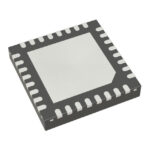 SY89546UMI
The activity of extra discounts on wholesale prices is in full swing…
Please fill in your contact information and we will send you the latest wholesale price list.





