 ChipApex | Global Electronic Components Supplier
SEARCH
Search Product
Search Post
— IC芯片 | 连接器 | 传感器 | 被动器件 —
Search productSearch post
— IC芯片 | 连接器 | 传感器 | 被动器件 —
Consult the customer manager about the wholesale price.
consultation hotline:86-132-6715-2157
email:[email protected]
Contact the product manager for consultation. One-stop consultation is available.
Do you want a lower wholesale price? Please send us your inquiry and we will reply immediately.
The SY89547LMI-TR is a high-speed differential multiplexer from the Precision Edge family, manufactured by Microchip Technology. It selects among four differential inputs and provides two copies of the selected input via LVDS outputs. The device supports data rates up to 3.2Gbps with a propagation delay of 440ps typical. It operates on a single 3.3V supply within a -40°C to +85°C temperature range. Packaged in a 32-pin MLF (5mm x 5mm) format, it features internal input termination accessible through VT pins for flexible AC or DC coupling.
Verify the specific ordering suffix 'MI' corresponds to the Sn-Pb lead finish as documented in the official datasheet. Confirm the '-TR' suffix indicates tape and reel packaging. Ensure the component meets RoHS requirements if applicable, noting that Pb-free variants carry different suffixes such as 'MG'. Cross-reference the manufacturer part number against current Microchip documentation to confirm availability and revision status.
Choose this component when a 4:1 differential multiplexer with dual output fanout is required. It is suitable for designs needing internal termination flexibility for various logic standards like LVDS, LVPECL, and CML. Consider alternatives like the SY89546U for 2.5V operation or the SY89545L if only one differential output is needed. Ensure the system can accommodate the 3.3V supply requirement and the specified thermal management for the MLF package.
This device belongs to Micrel's Precision Edge product family, now under Microchip Technology. It is designed for high-speed signal routing where low jitter and minimal crosstalk are critical. The SY89547L complements other devices in the series, such as the SY89544U and SY89545L, offering specific functionality for multi-channel selection with redundant output distribution in a compact surface-mount package.
Public confirmed substitute part numbers include SY89545LMG.
The SY89547L features a unique 3-pin internal termination design. Each side of the differential input pair terminates to a VT pin through 50Ω, allowing access to the termination network for maximum interface flexibility.
The device accepts both AC-coupled and DC-coupled inputs, including LVDS, LVPECL, and CML standards, without the need for external resistor-bias and termination networks.
The maximum operating frequency is 3.2 Gbps for NRZ data and 4 GHz for clock signals.
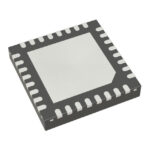 SY89547LMI-TR
The activity of extra discounts on wholesale prices is in full swing…
Please fill in your contact information and we will send you the latest wholesale price list.





