 ChipApex | Global Electronic Components Supplier
SEARCH
Search Product
Search Post
— IC芯片 | 连接器 | 传感器 | 被动器件 —
Search productSearch post
— IC芯片 | 连接器 | 传感器 | 被动器件 —
Consult the customer manager about the wholesale price.
consultation hotline:86-132-6715-2157
email:[email protected]
Contact the product manager for consultation. One-stop consultation is available.
Do you want a lower wholesale price? Please send us your inquiry and we will reply immediately.
The SY89840UMG-TR is a Precision LVPECL Runt Pulse Eliminator (RPE) 2:1 multiplexer designed for redundant source switchover applications. It operates from a 2.5V ±5% or 3.3V ±10% supply and supports frequencies up to 2.0 GHz. The device features an ultra-low jitter design with typical RMS phase jitter of 140 fs and MUX crosstalk-induced jitter of 0.7 ps rms. Propagation delay ranges from 460 ps to 880 ps depending on input voltage swing, with rise/fall times under 190 ps. It accepts AC or DC-coupled differential inputs as small as 100 mV single-ended or 200 mV differential without external level shifting.
Verify that the specific ordering suffix matches the required package type and reel configuration. Confirm the component meets RoHS compliance standards and lead finish specifications prior to integration. Ensure the supplier provides valid traceability documentation for the manufacturing lot. Check for any recent product change notifications regarding packaging or material composition updates.
Select this component when glitch-free switchover between two asynchronous clock sources is critical. The device is suitable for designs requiring low jitter performance and compatibility with various differential signaling standards including LVPECL, CML, and LVDS. Consider the industrial temperature range and supply voltage flexibility when designing power delivery networks.
This part belongs to Micrel's Precision Edge product line, now under Microchip Technology. It is specifically engineered for high-speed digital applications where signal integrity during source switching is paramount. The QFN-16 package facilitates compact PCB layouts while maintaining thermal performance for industrial environments.
SY89841U: Precision LVDS variant with similar RPE functionality but different output signaling standard.
If the selected input pair drops below the minimum amplitude requirement (less than 100mV single-ended or 200mV differential), the FSI circuit latches the output to the last valid clock state, preventing oscillations or metastable conditions.
The CAP pin connects to an external capacitor to control the Power-On Reset (POR) delay. This ensures the internal RPE logic starts up in a known state once the power supply stabilizes above 2.3V.
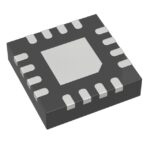 SY89840UMG-TR
The activity of extra discounts on wholesale prices is in full swing…
Please fill in your contact information and we will send you the latest wholesale price list.






