ChipApex | Global Electronic Components Supplier
SEARCH
Search Product
Search Post
— IC芯片 | 连接器 | 传感器 | 被动器件 —
Search productSearch post
— IC芯片 | 连接器 | 传感器 | 被动器件 —
Consult the customer manager about the wholesale price.
consultation hotline:86-132-6715-2157
email:[email protected]
Contact the product manager for consultation. One-stop consultation is available.
Do you want a lower wholesale price? Please send us your inquiry and we will reply immediately.
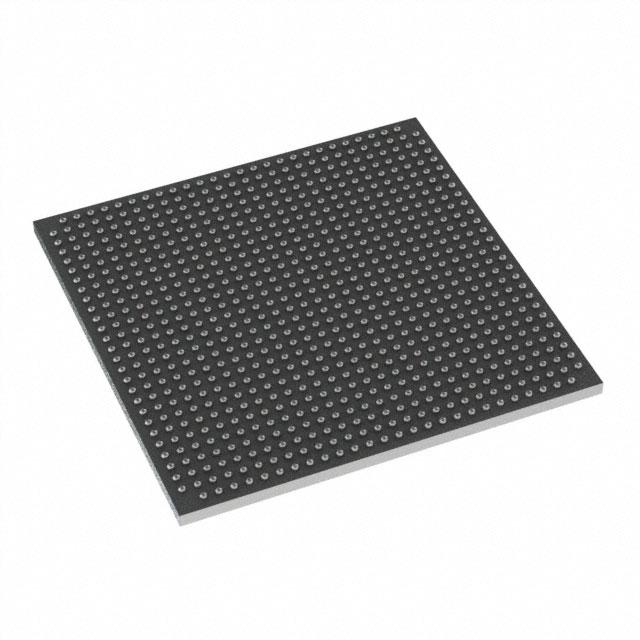
The T1024NSE7MQPA is a dual-core microprocessor from the NXP QorIQ T1024 series, built on the Power Architecture e5500 core. It operates at a maximum clock frequency of 1.2 GHz with a 64-bit data bus width. The device features 32 kB L1 instruction and data caches per core, alongside a 256 kB shared L2 cache and 160 kB of internal data RAM. It supports DDR3L/DDR4 SDRAM storage and includes interfaces such as Ethernet, PCIe, I2C, Serial, and USB. Operating within a commercial temperature range of 0°C to +105°C, it utilizes an FCPBGA-780 package.
Verify the specific suffix 'E7MQPA' against official NXP documentation to confirm the exact speed grade, temperature range, and packaging details. Ensure compliance with export regulations if applicable, as some variants may require additional authorization. Confirm that the required DDR3L/DDR4 memory components are compatible with the controller specifications before finalizing the bill of materials.
Select this component when a balance of processing performance and power efficiency is required for industrial or telecom environments. The 1.2 GHz speed grade offers sufficient throughput for moderate network loads compared to higher-frequency variants. Verify that the 0 to 105°C operating range aligns with the target application's thermal constraints and that the FCPBGA-780 footprint fits the PCB design.
This processor belongs to the QorIQ T1024 family, which provides scalable solutions for communication applications. It shares pin compatibility with higher-core-count processors like the T1042, allowing for flexible system design upgrades. The platform emphasizes software compatibility with previous generations while offering enhanced 64-bit capabilities and integrated hardware accelerators for network tasks.
Check for direct substitutes within the T1024 series, such as T1024NSN7KQPA (1.0 GHz) or T1024NXE7PQA (1.4 GHz), depending on required performance levels. Ensure any replacement maintains the same FCPBGA-780 package and software compatibility requirements.
 T1024NSE7MQPA
The activity of extra discounts on wholesale prices is in full swing…
Please fill in your contact information and we will send you the latest wholesale price list.