 ChipApex | Global Electronic Components Supplier

SEARCH
Search Product
Search Post
— IC芯片 | 连接器 | 传感器 | 被动器件 —
Search productSearch post
— IC芯片 | 连接器 | 传感器 | 被动器件 —
Consult the customer manager about the wholesale price.
consultation hotline:86-132-6715-2157
email:[email protected]
Contact the product manager for consultation. One-stop consultation is available.
Do you want a lower wholesale price? Please send us your inquiry and we will reply immediately.
The T1635T-8T is a Snubberless™ Triac manufactured by STMicroelectronics, designed for general-purpose AC switching applications requiring high commutation capability. It supports on/off or phase angle control functions and operates without an external snubber circuit when datasheet limits are respected. The device features an 800 V rated repetitive off-state voltage and conducts a maximum RMS on-state current of 16 A. It utilizes a TO-220 through-hole package with a non-insulated tab. The component is rated for a junction temperature range from -40°C to +150°C.
Verify the specific suffix 'T' indicates the standard TO-220 tube packaging configuration distinct from other variants like 'G' (D2PAK) or 'I' (Insulated). Confirm RoHS compliance status via the official datasheet before integration. Ensure the ordering quantity aligns with the manufacturer's standard tube pack size to avoid partial reel issues during assembly.
Select this component for designs requiring robust thermal management in through-hole layouts where high surge currents up to 126 A at 60 Hz must be handled. The absence of an insulated tab requires careful consideration of mounting strategies if electrical isolation from the heatsink is necessary. Verify that the application's peak voltage does not exceed the 900 V surge rating defined in the specifications.
This part belongs to the T1635 series of medium-current Triacs. It shares core electrical characteristics with surface-mount variants such as the T1635T-8G but differs in physical footprint and thermal dissipation path due to its through-hole construction. The series is characterized by its ability to operate without buffer circuits, reducing bill of materials complexity.
Direct pin-compatible replacements within the same family include the T1635T-8G in D2PAK format if board space permits redesign. For insulated requirements, the T1635T-8I offers similar electrical ratings with 2500 V rms tab insulation. Cross-referencing with other manufacturers requires verifying identical dV/dt and di/dt commutation limits.
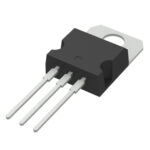 T1635T-8T

The activity of extra discounts on wholesale prices is in full swing…
Please fill in your contact information and we will send you the latest wholesale price list.





