 ChipApex | Global Electronic Components Supplier

SEARCH
Search Product
Search Post
— IC芯片 | 连接器 | 传感器 | 被动器件 —
Search productSearch post
— IC芯片 | 连接器 | 传感器 | 被动器件 —
Consult the customer manager about the wholesale price.
consultation hotline:86-132-6715-2157
email:[email protected]
Contact the product manager for consultation. One-stop consultation is available.
Do you want a lower wholesale price? Please send us your inquiry and we will reply immediately.
The STMicroelectronics T1650H-6T is a general-purpose mains power AC switching Triac in the H-Series, rated for 16 A RMS on-state current and 600 V repetitive peak off-state voltage. It operates within a junction temperature range of -40°C to +150°C and supports a non-repetitive surge current of 168 A. Key electrical parameters include a maximum gate trigger current (Igt) of 50 mA, a maximum gate trigger voltage (Vgt) of 1 V, and a maximum holding current (Ih) of 75 mA. The device features a peak on-state voltage of 1.5 V and a peak gate power dissipation of 1 W. Packaged in a TO-220 through-hole housing with three pins, it measures 10.4 mm in length and 15.9 mm in height.
Verify the specific suffix '6T' confirms the TO-220 through-hole package variant rather than surface mount options like '6G'. Confirm RoHS compliance status and UL certification file E81734 applicability for your region. Ensure the 16A rating aligns with your thermal management design, as performance depends heavily on junction temperature limits.
Select this component when a medium-current Triac with high commutation capability is required for AC loads. The 150°C max junction temperature allows for compact designs with smaller heatsinks. Compare Igt and Ih values against your gate drive circuit to ensure proper triggering and latching. Consider the TO-220 package constraints for PCB layout and mounting space availability.
The T1650H-6T belongs to STMicroelectronics' H-Series Triacs, designed for robust AC power control. This series includes variants with different current ratings and packages, such as the T1635H-6T with lower gate sensitivity and the T1650H-6G in a D2PAK surface-mount package. All share the Snubberless™ technology and high-temperature operation characteristics.
The T1635H-6T offers identical electrical ratings but with a lower gate trigger current of 35 mA. The T1650H-6G provides the same specifications in a TO-263 (D2PAK) surface-mount package. Verify pinout compatibility and thermal resistance differences when substituting these variants.
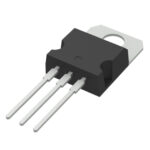 T1650H-6T

The activity of extra discounts on wholesale prices is in full swing…
Please fill in your contact information and we will send you the latest wholesale price list.





