 ChipApex | Global Electronic Components Supplier

SEARCH
Search Product
Search Post
— IC芯片 | 连接器 | 传感器 | 被动器件 —
Search productSearch post
— IC芯片 | 连接器 | 传感器 | 被动器件 —
Consult the customer manager about the wholesale price.
consultation hotline:86-132-6715-2157
email:[email protected]
Contact the product manager for consultation. One-stop consultation is available.
Do you want a lower wholesale price? Please send us your inquiry and we will reply immediately.
The T405-400T is a logic-level Triac manufactured by STMicroelectronics, designed for AC inductive load applications. It features an 800 V repetitive peak off-state voltage and a 4 A RMS on-state current capability. The device utilizes sensitive gate technology with a maximum gate trigger current of 5 mA, enabling direct interfacing with microcontrollers. Packaged in a surface-mount DPAK (TO-252) housing, it operates within a junction temperature range of -40°C to 125°C. This component is part of the T4 series, which incorporates snubberless technology to ensure high commutation performance.
Verify the specific suffix 'T' against the manufacturer's official datasheet to confirm the tape-and-reel packaging configuration. Ensure the selected variant matches the required 800V rating and DPAK package dimensions for your PCB layout. Cross-reference the full part number with authorized distributors to confirm current availability and RoHS compliance status before finalizing procurement orders.
Select this component when designing circuits that require direct MCU control of AC loads without intermediate optocouplers or driver ICs. The 4A current rating suits moderate-power household appliances. Verify that the system's peak inrush currents remain below the non-repetitive surge limit specified in the electrical characteristics table to prevent device failure during startup conditions.
This device belongs to the T405 family of logic-level Triacs from STMicroelectronics. While the T405-400B variant uses a standard DPAK package, the T405-400T designation typically indicates a specific reel packaging option for automated assembly. All variants share identical electrical specifications, including the 800V blocking voltage and 4A RMS current handling capabilities defined by the core silicon design.
Direct replacements include other STMicroelectronics T405 series devices with matching voltage and current ratings, such as the T405-600B or T405-800B, provided the package type is compatible. Third-party equivalents must be verified for identical gate trigger sensitivities and thermal resistance characteristics to ensure functional parity in existing designs.
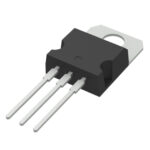 T405-400T

The activity of extra discounts on wholesale prices is in full swing…
Please fill in your contact information and we will send you the latest wholesale price list.





