ChipApex | Global Electronic Components Supplier
SEARCH
Search Product
Search Post
— IC芯片 | 连接器 | 传感器 | 被动器件 —
Search productSearch post
— IC芯片 | 连接器 | 传感器 | 被动器件 —
Consult the customer manager about the wholesale price.
consultation hotline:86-132-6715-2157
email:[email protected]
Contact the product manager for consultation. One-stop consultation is available.
Do you want a lower wholesale price? Please send us your inquiry and we will reply immediately.
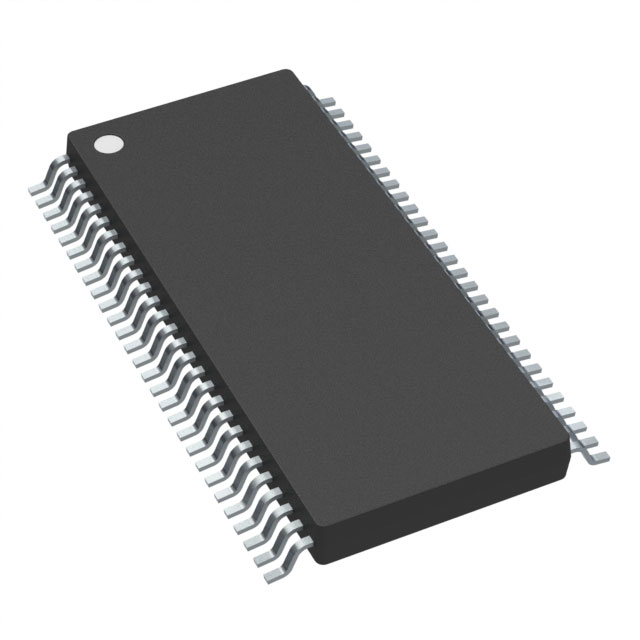
The TAS5182IDCAR is a stereo digital amplifier power stage controller designed to drive two discrete bridge-tied-load (BTL) MOSFET output stages. It delivers up to 100 W per channel at 6 Ω with efficiency exceeding 95%. The device accepts a 3.3-V digital PWM input and operates within a GVDD range of 9 V to 12.6 V and DVDD range of 3 V to 3.6 V. It features overcurrent, overtemperature, and undervoltage protection mechanisms. The component is housed in a low-profile 56-terminal TSSOP SMD package.
Verify the specific ordering suffix IDCA against the datasheet to confirm the industrial temperature rating (-40°C to 85°C). Ensure compatibility with external MOSFETs and the TAS50XX PWM processor family. Confirm that the required bootstrap capacitors and NTC resistors are included in the design. Validate the 56-pin DCA package dimensions for PCB layout requirements.
Select this controller when designing high-power stereo audio systems requiring discrete MOSFET output stages. It is suitable for applications needing efficient digital amplification with integrated fault protection. Consider the thermal performance of the PowerPAD package for heat dissipation. Ensure the system supports the necessary 3.3-V digital interface and external gate drive supplies.
The TAS5182 is part of Texas Instruments' PurePath digital audio solutions, specifically designed as a power stage controller. It complements TAS50XX digital audio PWM processors to create complete high-fidelity audio amplification systems. The device integrates advanced protection features and timing control to manage external H-bridges effectively.
TAS5182DCA
The device provides overcurrent, overtemperature, and undervoltage protection. Upon detecting a fault, it drives the SHUTDOWN terminal low and forces all gate outputs low, placing the MOSFET outputs in a high-impedance state.
The LOW/HIZ terminal determines the state of the MOSFET output stage during a reset. A logic high sets the outputs to a high-impedance state, while a logic low sets them to a low-impedance state.
 TAS5182IDCAR
The activity of extra discounts on wholesale prices is in full swing…
Please fill in your contact information and we will send you the latest wholesale price list.