ChipApex | Global Electronic Components Supplier
SEARCH
Search Product
Search Post
— IC芯片 | 连接器 | 传感器 | 被动器件 —
Search productSearch post
— IC芯片 | 连接器 | 传感器 | 被动器件 —
Consult the customer manager about the wholesale price.
consultation hotline:86-132-6715-2157
email:[email protected]
Contact the product manager for consultation. One-stop consultation is available.
Do you want a lower wholesale price? Please send us your inquiry and we will reply immediately.
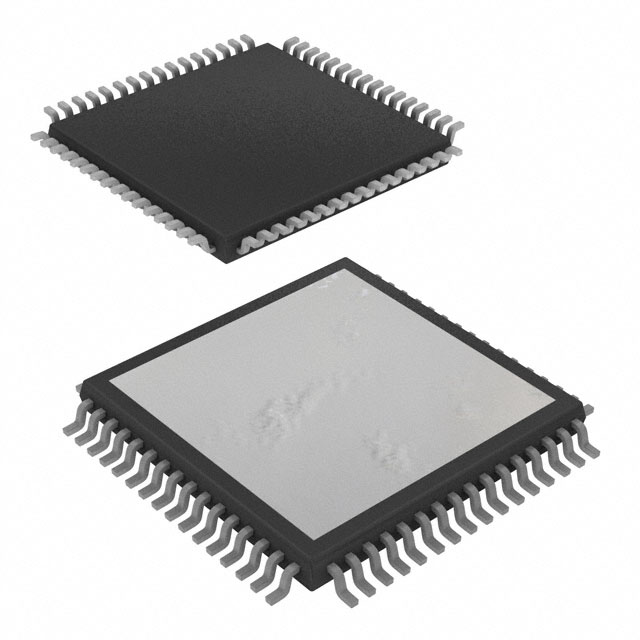
The TAS5612APHDR is a high-performance Class-D audio amplifier from Texas Instruments, part of the PurePath A series. It delivers 125W per channel in stereo mode or 250W in mono mode. The device features digital inputs and an integrated power stage. It operates within a supply voltage range of 18V to 38V. The component is housed in a 64-pin HTQFP package with exposed pad for thermal management. It supports differential analog inputs and includes protection features such as short-circuit and thermal shutdown.
Verify the specific suffix 'APHDR' corresponds to the tape and reel packaging configuration. Confirm the manufacturer date code and lot traceability requirements for your production line. Ensure the ordering quantity meets the minimum reel size specified by Texas Instruments. Check for any recent product change notices that may affect assembly or material composition. Validate that the component RoHS status aligns with your environmental compliance standards.
Select this model when digital audio interfaces are preferred over analog inputs to reduce external component count. Consider the HTQFP-64 package for its thermal performance in high-power density designs. Evaluate the 18V to 38V supply range compatibility with your system's power architecture. Compare the 125W/250W power ratings against your speaker impedance and efficiency requirements to ensure adequate headroom.
This component belongs to the TAS5612 family of high-power Class-D amplifiers. It is designed for applications requiring significant output power with minimal external circuitry. The PurePath A technology integrates the control logic and power MOSFETs into a single solution. This integration reduces board space and simplifies thermal design compared to discrete solutions.
TAS5613APHDR offers similar form factor but with different input characteristics and potentially higher power capabilities. Verify pin-to-pin compatibility and electrical parameter alignment before substitution. Review datasheet differences regarding input type and protection thresholds.
 TAS5612APHDR
The activity of extra discounts on wholesale prices is in full swing…
Please fill in your contact information and we will send you the latest wholesale price list.