 ChipApex | Global Electronic Components Supplier
SEARCH
Search Product
Search Post
— IC芯片 | 连接器 | 传感器 | 被动器件 —
Search productSearch post
— IC芯片 | 连接器 | 传感器 | 被动器件 —
Consult the customer manager about the wholesale price.
consultation hotline:86-132-6715-2157
email:[email protected]
Contact the product manager for consultation. One-stop consultation is available.
Do you want a lower wholesale price? Please send us your inquiry and we will reply immediately.
The TAS5624ADDV is a high-performance PurePath™ HD digital input Class-D power stage from Texas Instruments, serving as the thermal-enhanced version of the TAS5614A. It utilizes a PWM digital input architecture with integrated on-chip feedback in a 44-pin HTSSOP (DDV) package with exposed pad. In bridge-tied load (BTL) stereo mode, it delivers 2×150W output at 10% THD+N into 4Ω loads. In parallel bridge-tied load (PBTL) mono mode, it provides up to 300W into 2Ω. At 1% THD+N, it outputs 2×125W (4Ω BTL) or 1×250W (2Ω PBTL). The device operates with a supply voltage range of 12V to 38V and features low static current consumption.
Verify the specific ordering suffix when sourcing components. The TAS5624ADDV typically denotes tube packaging, whereas the TAS5624ADDVR variant indicates tape and reel packaging for automated surface-mount production. Confirm the required packaging format aligns with your assembly line capabilities before procurement to ensure compatibility with manufacturing processes.
Select this component for designs requiring high-power digital input amplification with minimal external filtering. The integrated feedback loop simplifies design by reducing sensitivity to power supply noise. Ensure the PCB layout strictly follows TI's recommended guidelines to manage thermal dissipation effectively, given the high power density and the necessity of the exposed pad connection for heat transfer.
This device belongs to the TAS5624A series, which represents a generation of high-efficiency digital audio power stages. It is specifically engineered as an improved thermal variant of the TAS5614A, offering enhanced heat dissipation capabilities within the same functional framework. The series is designed to support high-fidelity audio reproduction in compact form factors suitable for modern consumer electronics.
The TAS5614A is the primary predecessor model. While functionally similar, the TAS5624ADDV offers improved thermal performance. Verify pinout compatibility and thermal requirements when substituting, as the enhanced heat dissipation may allow for smaller heatsinks but requires careful attention to PCB copper area for optimal thermal management.
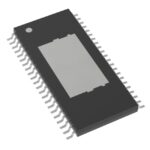 TAS5624ADDV
The activity of extra discounts on wholesale prices is in full swing…
Please fill in your contact information and we will send you the latest wholesale price list.







