 ChipApex | Global Electronic Components Supplier
SEARCH
Search Product
Search Post
— IC芯片 | 连接器 | 传感器 | 被动器件 —
Search productSearch post
— IC芯片 | 连接器 | 传感器 | 被动器件 —
Consult the customer manager about the wholesale price.
consultation hotline:86-132-6715-2157
email:[email protected]
Contact the product manager for consultation. One-stop consultation is available.
Do you want a lower wholesale price? Please send us your inquiry and we will reply immediately.
The TAS5780MDCA is a stereo, closed-loop Class-D audio amplifier manufactured by Texas Instruments. It features digital input and supports processing up to 96 kHz. The device delivers a maximum power output of 40 W to a parallel bridge-tied load (BTL). It operates within a power stage supply voltage range of 4.5 V to 26.4 V and an analog supply range of 4.5 V to 26.4 V. Key performance metrics include a total harmonic distortion plus noise (THD+N) of 0.2% at 1 kHz and a signal-to-noise ratio (SNR) of 103 dB. The typical quiescent current is 81.3 mA. It is housed in a 48-HTSSOP package and functions within an operating temperature range of -25°C to +85°C.
Verify the specific suffix 'MDCA' corresponds to the tube packaging variant when ordering. Confirm that the design supports the required 4.5 V to 26.4 V supply rails. Ensure the PCB layout accommodates the 48-pin HTSSOP package dimensions. Check for RoHS compliance status if required by regional regulations. Validate that the digital interface timing matches the source audio controller specifications.
Select this component for applications requiring high-power stereo output from a digital source. Compare against TAS5780MDCAR if reel packaging is preferred over tubes. Consider TAS5782M for higher power density or additional features. Ensure the system can handle the 40 W peak power capability into the target load impedance. Verify that the 96 kHz processing limit meets the application's sample rate requirements.
The TAS5780MDCA belongs to the TAS5780M series of digital input Class-D amplifiers. It is part of Texas Instruments' portfolio designed for high-fidelity audio reproduction. The device integrates the power stage and control logic into a single solution. It is commonly used in consumer electronics where space and efficiency are critical constraints.
TAS5780MDCAR is the tape-and-reel equivalent of the MDCA tube version. TAS5780M is the base device identifier without packaging suffixes. No direct cross-manufacturer replacements are documented in public sources.
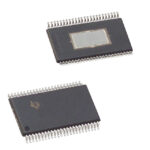 TAS5780MDCA
The activity of extra discounts on wholesale prices is in full swing…
Please fill in your contact information and we will send you the latest wholesale price list.






