 ChipApex | Global Electronic Components Supplier
SEARCH
Search Product
Search Post
— IC芯片 | 连接器 | 传感器 | 被动器件 —
Search productSearch post
— IC芯片 | 连接器 | 传感器 | 被动器件 —
Consult the customer manager about the wholesale price.
consultation hotline:86-132-6715-2157
email:[email protected]
Contact the product manager for consultation. One-stop consultation is available.
Do you want a lower wholesale price? Please send us your inquiry and we will reply immediately.
The TB62D787FTG,EL is a 24-channel LED driver IC featuring linear PWM dimming and a single-wire Manchester encoding interface. It operates with an input voltage range of 7V to 28V and provides a 5V internal linear regulator. Each channel delivers a constant output current of 40mA, with output voltages ranging from 0.5V to 4V. The device supports communication data daisy-chaining and functions within a temperature range of -40°C to +85°C. It is housed in a compact 40-VQFN (6x6) package with an exposed thermal pad.
Verify the specific suffix EL against official Toshiba Semiconductor and Storage documentation to confirm packaging and material specifications. Ensure compatibility with the required 40-VQFN footprint and thermal management requirements during design integration. Confirm that the single-wire interface protocol matches the controller's transmission standards before finalizing component selection.
Select this component when a high channel count is required alongside a single-wire control interface. The integrated 28V-to-5V linear regulator simplifies power distribution for multiple units. Consider the 40-VQFN package size for space-constrained designs. Verify that the 40mA per channel current rating aligns with the target LED array specifications and thermal dissipation capabilities of the PCB layout.
This part belongs to the TB62D78x series of LED drivers designed for scalable lighting architectures. It complements the 9-channel TB62D786FTG by offering expanded 24-channel capacity. The series utilizes a consistent single-wire Manchester encoding interface, allowing mixed configurations within a single system while maintaining standardized communication protocols across different channel densities.
The TB62D786FTG serves as a lower-channel alternative within the same product family. Both devices share the single-wire Manchester encoding interface and similar architectural features. Selection depends on whether the application requires 9 or 24 channels. Verify pinout compatibility and thermal performance differences between the VQFN-24 and 40-VQFN packages if substituting directly.
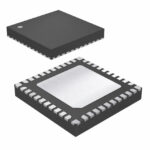 TB62D787FTG,EL
The activity of extra discounts on wholesale prices is in full swing…
Please fill in your contact information and we will send you the latest wholesale price list.





