 ChipApex | Global Electronic Components Supplier
SEARCH
Search Product
Search Post
— IC芯片 | 连接器 | 传感器 | 被动器件 —
Search productSearch post
— IC芯片 | 连接器 | 传感器 | 被动器件 —
Consult the customer manager about the wholesale price.
consultation hotline:86-132-6715-2157
email:[email protected]
Contact the product manager for consultation. One-stop consultation is available.
Do you want a lower wholesale price? Please send us your inquiry and we will reply immediately.
The TB6562ANG is a bipolar stepping motor driver IC manufactured by Toshiba Semiconductor and Storage. It utilizes DMOS technology to provide full-bridge drive capabilities with an output current capacity of 1.5 A. The device operates within a supply voltage range of 10 V to 34 V and supports step resolutions of 1, 1/2, and 1/4. Designed for through-hole mounting, it is housed in a 24-SDIP package. The component functions as a fully integrated controller and power stage, suitable for driving bipolar stepper motors in various applications.
Verify the specific suffix designation when ordering, as packaging formats vary between tube and other configurations. Confirm that the 24-SDIP through-hole package aligns with your PCB layout requirements. Ensure thermal management strategies account for the specified power dissipation limits during operation. Cross-reference the manufacturer's latest datasheet for any updates on RoHS compliance or environmental certifications before finalizing procurement specifications.
Select this component for applications requiring a standalone bipolar stepper driver with integrated control features. The 1.5 A output current rating suits moderate load requirements without external amplification. Consider the 24-SDIP package size for prototyping or designs where surface area is less constrained than in high-density consumer electronics. Verify that the operating temperature range meets the environmental conditions of the target deployment site.
This part belongs to the TB6562 series of stepping motor drivers from Toshiba. The series includes variants with different packages, such as the AFG version in SSOP format. The ANG suffix specifically denotes the SDIP through-hole package variant. This family is designed to simplify motor control design by combining logic and power elements.
The TB6562AFG serves as a pin-compatible alternative in a surface-mount SSOP package. Both parts share identical electrical characteristics and functionality. Selection depends primarily on the required mounting technology and PCB space constraints rather than performance differences.
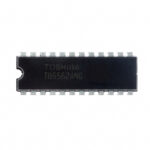 TB6562ANG
The activity of extra discounts on wholesale prices is in full swing…
Please fill in your contact information and we will send you the latest wholesale price list.





