ChipApex | Global Electronic Components Supplier
SEARCH
Search Product
Search Post
— IC芯片 | 连接器 | 传感器 | 被动器件 —
Search productSearch post
— IC芯片 | 连接器 | 传感器 | 被动器件 —
Consult the customer manager about the wholesale price.
consultation hotline:86-132-6715-2157
email:[email protected]
Contact the product manager for consultation. One-stop consultation is available.
Do you want a lower wholesale price? Please send us your inquiry and we will reply immediately.
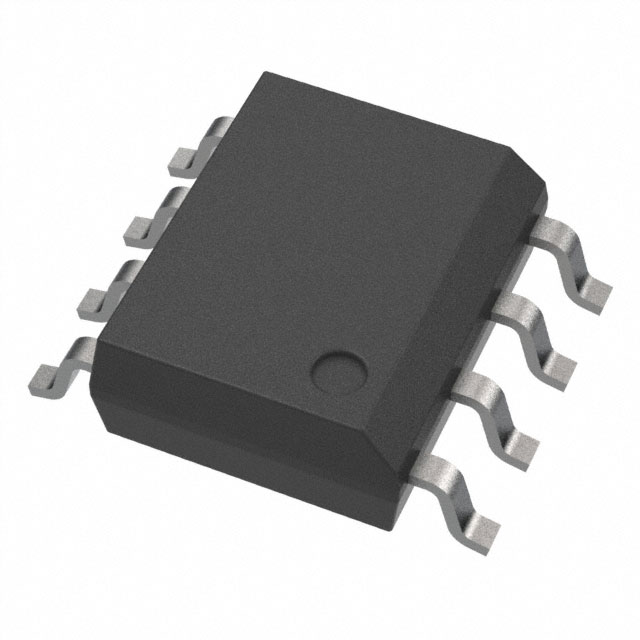
The Toshiba TB67H450FNG,EL is a single-channel PWM chopper-type brushed DC motor driver manufactured using BiCD process technology. It features an integrated H-bridge with low on-resistance output MOSFETs (typical 0.6Ω). The device supports a rated voltage of 50V and a maximum continuous output current of 3.5A. Operating supply voltage ranges from 4.5V to 44V. It offers four operational modes: forward, reverse, brake, and stop. Key electrical parameters include a logic input high level of 2.0V–5.5V and low level of 0V–0.8V. The package is an 8-pin HSOP with dimensions of 5.79mm width, 5mm length, and 1.7mm height.
Verify the specific suffix EL against official Toshiba documentation to confirm packaging and tape specifications. Confirm RoHS compliance status directly with the manufacturer or authorized distributors. Ensure PCB layout adheres to thermal dissipation guidelines due to power handling capabilities. Check for any design-in restrictions or obsolescence notices prior to final procurement decisions.
Select this component for applications requiring high integration and reduced bill of materials by eliminating external current sense resistors. Suitable for designs needing robust protection features like UVLO and TSD within a small footprint. Consider thermal management requirements given the 3.5A output capability in an HSOP package. Ideal for systems where space constraints limit the use of discrete driver solutions.
The TB67H450FNG belongs to Toshiba's series of high-performance motor driver ICs designed for embedded motion control. It utilizes BiCD process technology to combine high-voltage DMOS outputs with low-voltage CMOS logic. This integration allows for simplified peripheral circuitry compared to traditional discrete solutions. The part is distinct from higher-current variants in the same family but shares similar architectural benefits.
Public sources indicate AS4950 as a pin-to-pin compatible alternative offering similar functionality. Verify electrical parameter matching and thermal characteristics before substitution. Ensure logic level compatibility and protection feature parity between the original and replacement parts.
 TB67H450FNG,EL
The activity of extra discounts on wholesale prices is in full swing…
Please fill in your contact information and we will send you the latest wholesale price list.