ChipApex | Global Electronic Components Supplier
SEARCH
Search Product
Search Post
— IC芯片 | 连接器 | 传感器 | 被动器件 —
Search productSearch post
— IC芯片 | 连接器 | 传感器 | 被动器件 —
Consult the customer manager about the wholesale price.
consultation hotline:86-132-6715-2157
email:[email protected]
Contact the product manager for consultation. One-stop consultation is available.
Do you want a lower wholesale price? Please send us your inquiry and we will reply immediately.
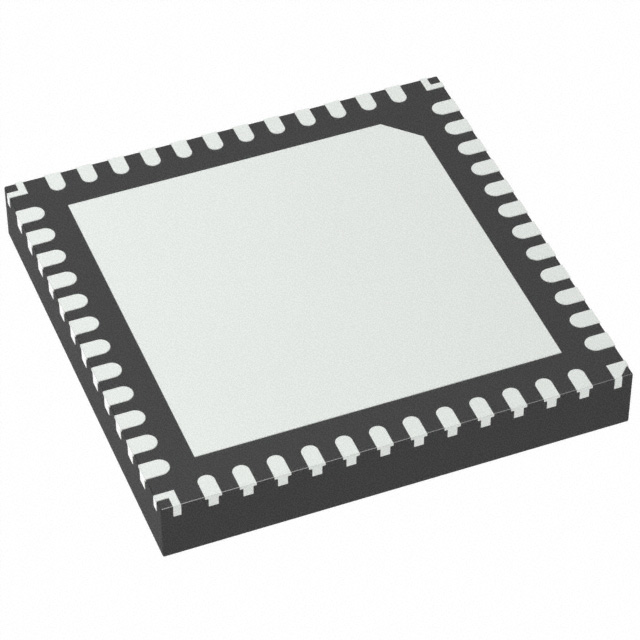
The TB67S279FTG,EL is a bipolar stepper motor driver IC manufactured by Toshiba Semiconductor and Storage. It features a 48-VQFN (7x7) surface-mount package with four half-bridge outputs. The device supports a load voltage range of 10 V to 47 V and delivers an output current of 2 A. It operates on a logic supply voltage of 4.75 V to 5.25 V and functions within a temperature range of -20°C to +85°C. The integrated circuit includes a CLK-In decoder for microstepping resolution up to 1/32 step and utilizes Active Gain Control (AGC) technology to prevent motor stall.
Verify the specific suffix EL against the manufacturer's official datasheet to confirm packaging and tape specifications. Ensure the design accommodates the 48-VQFN thermal requirements given the 1.3 W power dissipation rating. Confirm that the application voltage remains within the 10 V to 47 V load range to maintain operational integrity.
Select this component when a fully integrated bipolar stepper driver with clock-input microstepping capability is required. It is suitable for designs prioritizing reduced external component count due to the ACDS feature. Consider the 2 A output current limit and the specific pinout compatibility if replacing older models in the TB67S series family.
This part belongs to Toshiba's high-performance stepping motor driver series utilizing BiCD process technology. It shares pin compatibility with related models like the TB67S289FTG and TB67S249FTG, differing primarily in output current ratings and gain characteristics. The series is designed for compact, efficient motor control solutions in industrial and office applications.
The TB67S289FTG and TB67S249FTG are documented as having identical pin assignments within the same product family. Verify that the alternative model's output current and gain thresholds meet the specific torque and resolution requirements of the target application before substitution.
Active Gain Control (AGC) dynamically increases current to overcome high-torque conditions to prevent stalling, then returns to nominal levels during light loads, reducing energy waste compared to constant peak current methods.
The internal CLK-In decoder supports microstepping resolutions of 1, 1/2, 1/4, 1/8, 1/16, and 1/32 step per quadrant.
 TB67S279FTG,EL
The activity of extra discounts on wholesale prices is in full swing…
Please fill in your contact information and we will send you the latest wholesale price list.