 ChipApex | Global Electronic Components Supplier
SEARCH
Search Product
Search Post
— IC芯片 | 连接器 | 传感器 | 被动器件 —
Search productSearch post
— IC芯片 | 连接器 | 传感器 | 被动器件 —
Consult the customer manager about the wholesale price.
consultation hotline:86-132-6715-2157
email:[email protected]
Contact the product manager for consultation. One-stop consultation is available.
Do you want a lower wholesale price? Please send us your inquiry and we will reply immediately.
The TB9052FNG(EL) is a pre-driver integrated circuit designed for automotive applications, certified to AEC-Q100 standards. It operates within a supply voltage range of 6 V to 18 V and supports an output current of 2.5 mA with a maximum power dissipation of 3.8 W. The device features two outputs and functions at a load voltage of up to 18 V. It is housed in a 48-pin SSOP package suitable for surface mount installation. The component ensures reliable performance across an extended temperature range from -40°C to +125°C, making it suitable for harsh automotive environments.
Verify the specific suffix EL against the manufacturer's official datasheet to confirm pinout and electrical characteristics match your design requirements. Ensure that the SSOP-48 footprint aligns with your PCB layout constraints. Confirm AEC-Q100 qualification status if automotive compliance is mandatory for your final product certification. Check humidity sensitivity levels for proper storage and handling procedures during assembly.
Select this component when a dedicated pre-driver stage is required for automotive brushed DC motors. The 2.5 mA output current capability suits driving external power stages rather than direct motor connection. Consider the 48-pin SSOP package size relative to available board space. Verify that the 6 V to 18 V supply range matches your system's power architecture. Evaluate thermal management needs given the 3.8 W power dissipation rating.
This part belongs to Toshiba's automotive motor driver family, specifically designed as a pre-driver IC. It complements higher-current power stages by providing signal conditioning and protection logic. The AEC-Q100 certification places it within components validated for rigorous automotive quality and longevity standards. It serves as a critical interface between microcontroller signals and high-power motor switching elements.
Consult Toshiba's official obsolescence notices or replacement guides for direct substitutes. Cross-reference pinouts and electrical parameters with any alternative pre-driver ICs before implementation. Verify that any substitute maintains AEC-Q100 certification if automotive use is required.
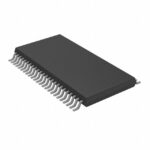 TB9052FNG(EL)
The activity of extra discounts on wholesale prices is in full swing…
Please fill in your contact information and we will send you the latest wholesale price list.





