 ChipApex | Global Electronic Components Supplier
SEARCH
Search Product
Search Post
— IC芯片 | 连接器 | 传感器 | 被动器件 —
Search productSearch post
— IC芯片 | 连接器 | 传感器 | 被动器件 —
Consult the customer manager about the wholesale price.
consultation hotline:86-132-6715-2157
email:[email protected]
Contact the product manager for consultation. One-stop consultation is available.
Do you want a lower wholesale price? Please send us your inquiry and we will reply immediately.
The TC1303B-PD0EMF is a dual-output power management integrated circuit manufactured by Microchip Technology. It integrates a 500 mA synchronous buck regulator and a 300 mA low-dropout (LDO) linear regulator within a single package. The device operates with an input voltage range of 2.7 V to 5.5 V, featuring a typical quiescent current of 65 µA. The synchronous buck converter utilizes a fixed 2.0 MHz PWM frequency for heavy loads and transitions automatically to PFM mode for efficiency at light loads. The component is housed in a 10-pin DFN-10 package measuring 3 mm x 3 mm with a height of 0.9 mm.
Verify the specific suffix PD0 against official Microchip documentation to confirm the exact output voltage configuration. Ensure compatibility with the required PCB footprint for the DFN-10 package. Confirm moisture sensitivity level handling procedures during assembly. Cross-reference the ordering part number with the manufacturer's latest datasheet to validate availability and revision status before finalizing procurement.
Select this component when a compact solution is needed for generating two distinct regulated voltages from a single input source. The internal compensation simplifies design by reducing external component count. Consider the thermal performance of the DFN-10 package relative to the expected load current. Verify that the adjustable or fixed output voltage options meet the system requirements without additional external feedback networks if using standard fixed versions.
This part belongs to the TC1303 family of dual-output regulators. The series includes variants such as TC1303A, TC1303C, and TC1304, which share similar functional blocks but may differ in specific electrical characteristics or pin configurations. The TC1303B specifically denotes the version with the described 500 mA buck and 300 mA LDO capabilities.
Direct substitutes include other members of the TC1303 family like TC1303A or TC1303C, provided the output voltage settings match. Alternative devices must be verified for pin-to-pin compatibility and equivalent electrical specifications.
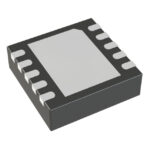 TC1303B-PD0EMF
The activity of extra discounts on wholesale prices is in full swing…
Please fill in your contact information and we will send you the latest wholesale price list.





