 ChipApex | Global Electronic Components Supplier
SEARCH
Search Product
Search Post
— IC芯片 | 连接器 | 传感器 | 被动器件 —
Search productSearch post
— IC芯片 | 连接器 | 传感器 | 被动器件 —
Consult the customer manager about the wholesale price.
consultation hotline:86-132-6715-2157
email:[email protected]
Contact the product manager for consultation. One-stop consultation is available.
Do you want a lower wholesale price? Please send us your inquiry and we will reply immediately.
The TC1303B-SH0EMFTR is a dual-output power management IC manufactured by Microchip Technology, featuring a 500 mA synchronous buck regulator and a 300 mA low-dropout (LDO) regulator. It operates within an input voltage range of 2.7 V to 5.5 V, with a nominal rating of 3.6 V. The device utilizes current-mode control and pulse width modulation, switching at a maximum frequency of 2400 kHz. It incorporates automatic transition from PWM to PFM modes for efficiency optimization. The component is housed in a 10-pin DFN package measuring 3 x 3 mm with a height of 0.9 mm.
Verify the specific suffix code against official Microchip documentation to confirm the exact output voltage configuration and package variant. Ensure compatibility with RoHS standards and lead-free requirements as specified in the datasheet. Cross-reference the part number with authorized distributors to confirm availability and authenticity. Check for any specific ordering information regarding tape and reel specifications if applicable.
Select this component when a compact solution is required for generating two distinct voltage rails from a single input source. Consider the internal compensation features which simplify external component selection. Evaluate the quiescent current specifications against standby power requirements. Verify that the thermal performance of the DFN package meets the thermal dissipation needs of the target application under maximum load conditions.
This part belongs to the TC1303 family of dual-output regulators designed for space-constrained applications. The series integrates both switching and linear regulation technologies to provide flexible power solutions. Variants within the family differ primarily in output voltage settings and package options, sharing core control architectures and protection features.
Consult official Microchip substitution guides for verified alternatives. Ensure replacement parts maintain compatible input voltage ranges and output current capabilities. Verify pin-to-pin compatibility if direct board replacement is intended without schematic modifications.
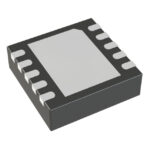 TC1303B-SH0EMFTR
The activity of extra discounts on wholesale prices is in full swing…
Please fill in your contact information and we will send you the latest wholesale price list.





