 ChipApex | Global Electronic Components Supplier

SEARCH
Search Product
Search Post
— IC芯片 | 连接器 | 传感器 | 被动器件 —
Search productSearch post
— IC芯片 | 连接器 | 传感器 | 被动器件 —
Consult the customer manager about the wholesale price.
consultation hotline:86-132-6715-2157
email:[email protected]
Contact the product manager for consultation. One-stop consultation is available.
Do you want a lower wholesale price? Please send us your inquiry and we will reply immediately.
The TC74HC245APF is an octal bus transceiver fabricated with silicon gate C2MOS technology. It provides bidirectional asynchronous communication between data busses with a wide operating voltage range of 2 V to 6 V. The device features three-state outputs and balanced propagation delays, achieving high-speed operation similar to equivalent LSTTL while maintaining low power dissipation. It includes protection circuits against static discharge or transient excess voltage on all inputs.
Verify the specific package type required, as the datasheet lists both DIP20 and SOP20 options for the TC74HC245A series. Confirm RoHS compliance status directly with Toshiba Semiconductor and Storage representatives, as environmental declarations are subject to change. Ensure design reviews align with the manufacturer's reliability handbook regarding derating concepts and handling precautions.
Select this component when bidirectional data transfer is required between busses operating within the 2 V to 6 V supply range. The non-inverting output characteristic makes it suitable for direct bus interfacing without signal inversion. Consider the 15 LSTTL load drive capability for driving multiple downstream logic inputs effectively.
This part belongs to the TC74HC245A family of octal bus transceivers manufactured by Toshiba Semiconductor and Storage. It is designed using silicon gate C2MOS technology to deliver high-speed performance alongside low power consumption. The device serves as a standard interface solution for digital systems requiring reliable bidirectional data flow control.
The TC74HC245AF is a pin-compatible variant within the same product family. Both devices share identical electrical characteristics and functionality, differing primarily in packaging style. Verify that the alternative package meets the physical layout requirements of the target application.
The direction is controlled by the logic level applied to the DIR input pin.
When G is high, the device is disabled, and the bus outputs enter a high-impedance state, effectively isolating the busses.
Yes, signals should not be applied to any bus pins when the device is in the output mode, as this may result in damage.
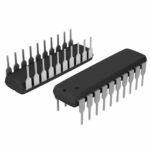 TC74HC245APF

The activity of extra discounts on wholesale prices is in full swing…
Please fill in your contact information and we will send you the latest wholesale price list.





