 ChipApex | Global Electronic Components Supplier
SEARCH
Search Product
Search Post
— IC芯片 | 连接器 | 传感器 | 被动器件 —
Search productSearch post
— IC芯片 | 连接器 | 传感器 | 被动器件 —
Consult the customer manager about the wholesale price.
consultation hotline:86-132-6715-2157
email:[email protected]
Contact the product manager for consultation. One-stop consultation is available.
Do you want a lower wholesale price? Please send us your inquiry and we will reply immediately.
The TC74LCX244FT(EL) is a low-voltage octal bus buffer manufactured by Toshiba Semiconductor and Storage. It operates within a power supply voltage range of 1.65 V to 3.6 V, with inputs and outputs tolerant up to 5.5 V. The device features two active-low output enables and provides non-inverting 3-state buffering for high-speed operation. Propagation delay is specified at a maximum of 6.5 ns at 3.0 V to 3.6 V. Output drive capability reaches ±24 mA minimum at 3.0 V. It includes power-down protection on all inputs and outputs.
Verify the specific package suffix against the datasheet, as the 'EL' designation may indicate a specific tape-and-reel or packaging variant not explicitly detailed in the general TC74LCX244F documentation. Confirm RoHS compliance status directly with the manufacturer, as environmental classifications can vary by production batch and region. Ensure the ordering part number matches the exact electrical characteristics required for the target application voltage.
Select this component when designing systems requiring interface between 3.3-V logic and 5-V tolerant buses. The device supports low-voltage operation down to 1.65 V while maintaining high-speed performance. Consider the 20-pin SOP or VSSOP packages based on board space constraints. Verify that the input rise and fall times remain within the specified limits to ensure accurate propagation delay performance.
This component belongs to the 74LCX family of low-voltage CMOS logic integrated circuits. It serves as an octal buffer designed for high-speed applications in portable and battery-powered equipment. The device maintains compatibility with legacy 74-series logic standards while offering improved power efficiency and speed characteristics suitable for modern digital systems.
Direct substitutes include other 74LCX244 variants from different manufacturers that maintain identical pinouts and electrical specifications. Ensure any replacement supports the same 5-V tolerance and 3-state output requirements. Verify that alternative sources offer equivalent propagation delays and output drive currents for the intended operating voltage.
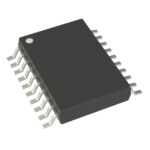 TC74LCX244FT(EL)
The activity of extra discounts on wholesale prices is in full swing…
Please fill in your contact information and we will send you the latest wholesale price list.





