 ChipApex | Global Electronic Components Supplier
SEARCH
Search Product
Search Post
— IC芯片 | 连接器 | 传感器 | 被动器件 —
Search productSearch post
— IC芯片 | 连接器 | 传感器 | 被动器件 —
Consult the customer manager about the wholesale price.
consultation hotline:86-132-6715-2157
email:[email protected]
Contact the product manager for consultation. One-stop consultation is available.
Do you want a lower wholesale price? Please send us your inquiry and we will reply immediately.
The TC74LCX245FT(EL) is a low-voltage octal bus transceiver manufactured by Toshiba Semiconductor and Storage. It operates within a power supply voltage range of 1.65 V to 3.6 V, supporting bidirectional data transmission between two buses. The device features 5-V tolerant inputs and outputs, allowing safe interfacing with 5-V systems while powered by lower voltages. It includes common control for direction (DIR) and output enable (OE), providing high-speed operation with propagation delays as low as 7.0 ns at 3.3 V. The component offers strong drive capability with output currents up to 24 mA and incorporates power-down protection on all pins.
Verify that the specific ordering suffix corresponds to the required package type, such as SOP or VSSOP, as indicated in official documentation. Confirm RoHS compliance status directly from the manufacturer's datasheet or product specifications before procurement. Ensure the component version meets any specific manufacturing date requirements if operating parameters for lower voltages are critical to the design.
Select this component when designing systems requiring low-voltage operation down to 1.65 V combined with 5-V tolerance. It is suitable for applications needing high-speed data transfer with minimal power dissipation. Consider its compatibility with standard 74-series logic families for ease of integration into existing designs. Verify that the required output current and propagation delay specifications align with the system's performance requirements.
This part belongs to the TC74LCX series of CMOS digital integrated circuits. It is an octal bus transceiver designed for use in low-voltage applications. The device is fabricated using silicon monolithic technology and is intended for bidirectional data transmission. It maintains CMOS low power dissipation while achieving high-speed operation comparable to equivalent LSTTL devices.
The device is pin and function compatible with other 74 series 245 types, including 74AC, VHC, HC, F, ALS, and LS variants. When substituting, verify that the alternative component supports the required voltage levels and speed characteristics. Ensure that the replacement also provides 5-V tolerance if interfacing with 5-V systems is necessary.
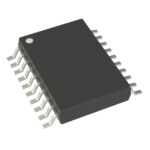 TC74LCX245FT(EL)
The activity of extra discounts on wholesale prices is in full swing…
Please fill in your contact information and we will send you the latest wholesale price list.





