 ChipApex | Global Electronic Components Supplier
SEARCH
Search Product
Search Post
— IC芯片 | 连接器 | 传感器 | 被动器件 —
Search productSearch post
— IC芯片 | 连接器 | 传感器 | 被动器件 —
Consult the customer manager about the wholesale price.
consultation hotline:86-132-6715-2157
email:[email protected]
Contact the product manager for consultation. One-stop consultation is available.
Do you want a lower wholesale price? Please send us your inquiry and we will reply immediately.
The TCET1114G is a single-channel transistor output optocoupler manufactured by Vishay Semiconductor Opto Division. It features an NPN phototransistor output and utilizes a 4-DIP package for through-hole mounting. The device provides high isolation with a rated insulation voltage of 5000 Vrms. Key electrical parameters include a maximum collector-emitter voltage of 70 V, a maximum collector current of 50 mA, and a forward voltage of 1.6 V at a forward current of 60 mA. The current transfer ratio ranges from 240% to 480%. Operating temperatures span from -40°C to +110°C.
Verify the specific current transfer ratio bin (240-480%) required for the application against the manufacturer's datasheet specifications. Confirm that the 4-DIP package dimensions align with the target PCB layout. Ensure the operating temperature range meets the environmental requirements of the end-use system. Cross-reference the official Vishay part number to avoid confusion with similar series components.
Select this component when high-temperature stability and robust isolation are required for single-channel signal coupling. The wide current transfer ratio range allows for flexibility in circuit design but necessitates careful consideration of gain variations. Compare performance metrics against alternative optocouplers if specific switching speed or lower power consumption is critical for the application.
This component belongs to the TCET series of transistor output optocouplers from Vishay. It shares common characteristics such as the NPN phototransistor output structure and DIP packaging with other models in the family, differentiated primarily by their current transfer ratio specifications and thermal ratings. It serves as a standard solution for galvanic isolation in electronic circuits.
Direct substitutes within the same Vishay series may include TCET1111G, TCET1112G, and TCET1113G, which share identical pinouts and mechanical dimensions but differ in current transfer ratio ranges. Verify compatibility before substitution.
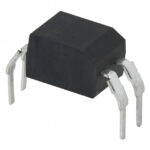 TCET1114G
The activity of extra discounts on wholesale prices is in full swing…
Please fill in your contact information and we will send you the latest wholesale price list.






