 ChipApex | Global Electronic Components Supplier
SEARCH
Search Product
Search Post
— IC芯片 | 连接器 | 传感器 | 被动器件 —
Search productSearch post
— IC芯片 | 连接器 | 传感器 | 被动器件 —
Consult the customer manager about the wholesale price.
consultation hotline:86-132-6715-2157
email:[email protected]
Contact the product manager for consultation. One-stop consultation is available.
Do you want a lower wholesale price? Please send us your inquiry and we will reply immediately.
The TCLT1109 is a single-channel transistor output optocoupler manufactured by Vishay Semiconductor Opto Division. It features an NPN phototransistor with a base terminal for improved switching performance and stability. The device provides electrical isolation with a rated insulation voltage of 5000 Vrms. Key electrical parameters include a minimum current transfer ratio (CTR) of 200% and a maximum CTR of 400%. The forward voltage is specified at 1.6 V, with a maximum collector-emitter saturation voltage of 300 mV. Switching characteristics include a typical rise time of 3 µs and a fall time of 4.7 µs. The component is housed in a compact SOP-5 package.
Verify the specific ordering suffix to confirm the exact package variant and tape-and-reel specifications. Ensure that the procurement documentation references the official Vishay datasheet for the TCLT1109 to validate compliance with RoHS directives and relevant safety standards such as UL1577 and VDE. Cross-reference the manufacturer part number against authorized distributor catalogs to prevent substitution errors.
Select this component when high-speed switching is required alongside robust electrical isolation. The presence of a base terminal allows for external biasing or faster discharge of junction capacitance, distinguishing it from standard phototransistor optocouplers. Evaluate the 200-400% CTR range against the load requirements to ensure sufficient drive capability without excessive input current. Confirm that the SOP-5 footprint aligns with the PCB layout constraints.
The TCLT1109 belongs to the family of transistor output optocouplers produced by Vishay Semiconductor Opto Division. It is designed for general-purpose isolation applications where moderate speed and high reliability are necessary. The device complements other models in the series by offering a balance between switching performance and cost-effectiveness, suitable for mass-produced electronic equipment requiring certified isolation barriers.
Publicly confirmed substitute part numbers are not available in the provided source material. Verify compatibility with alternative components by comparing pin configurations, isolation voltages, and current transfer ratios against the original design specifications.
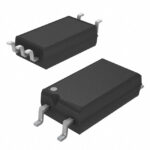 TCLT1109
The activity of extra discounts on wholesale prices is in full swing…
Please fill in your contact information and we will send you the latest wholesale price list.






