 ChipApex | Global Electronic Components Supplier
SEARCH
Search Product
Search Post
— IC芯片 | 连接器 | 传感器 | 被动器件 —
Search productSearch post
— IC芯片 | 连接器 | 传感器 | 被动器件 —
Consult the customer manager about the wholesale price.
consultation hotline:86-132-6715-2157
email:[email protected]
Contact the product manager for consultation. One-stop consultation is available.
Do you want a lower wholesale price? Please send us your inquiry and we will reply immediately.
The TCLT1112 is a single-channel transistor output optocoupler manufactured by Vishay Semiconductor Opto Division. It features an NPN phototransistor with a base terminal for enhanced switching performance and isolation capabilities. The device provides a high isolation voltage of 5000 Vrms, ensuring robust signal transmission across isolated circuits. Packaged in a compact 6-SOP (5-pin) surface-mount format, it supports a maximum collector current of 50 mA and operates within a temperature range of -55°C to +100°C. The component is designed for applications requiring reliable electrical isolation and fast response times.
Verify the specific suffix or tape-and-reel configuration required for your manufacturing process, as packaging options may vary. Confirm that the 6-SOP footprint matches your PCB design guidelines. Ensure compliance with RoHS directives if applicable to your region. Cross-reference the datasheet revision date to confirm parameter stability before finalizing the bill of materials.
Select this component when a phototransistor output with a base pin is necessary for faster turn-off times or linear operation. Compare the 5000 Vrms isolation rating against system safety requirements. Consider the 6-SOP package dimensions for board space constraints. Evaluate the operating temperature range to ensure suitability for the intended environmental conditions.
The TCLT1112 belongs to Vishay's family of transistor output optocouplers, which are designed for general-purpose isolation tasks. It shares similar packaging and basic functionality with related models like the TCLT1113 and TCLT1108, but differs in specific electrical characteristics such as current transfer ratio ranges and saturation voltages. This series is commonly used in cost-sensitive applications requiring reliable galvanic isolation.
Potential substitutes include the TCLT1113 and TCLT1108 from the same manufacturer, provided their electrical parameters meet the circuit requirements. Verify pin compatibility and isolation voltage ratings before substitution. Consult official Vishay documentation for detailed cross-reference information and ensure mechanical fit within the existing footprint.
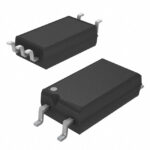 TCLT1112
The activity of extra discounts on wholesale prices is in full swing…
Please fill in your contact information and we will send you the latest wholesale price list.






