ChipApex | Global Electronic Components Supplier
SEARCH
Search Product
Search Post
— IC芯片 | 连接器 | 传感器 | 被动器件 —
Search productSearch post
— IC芯片 | 连接器 | 传感器 | 被动器件 —
Consult the customer manager about the wholesale price.
consultation hotline:86-132-6715-2157
email:[email protected]
Contact the product manager for consultation. One-stop consultation is available.
Do you want a lower wholesale price? Please send us your inquiry and we will reply immediately.
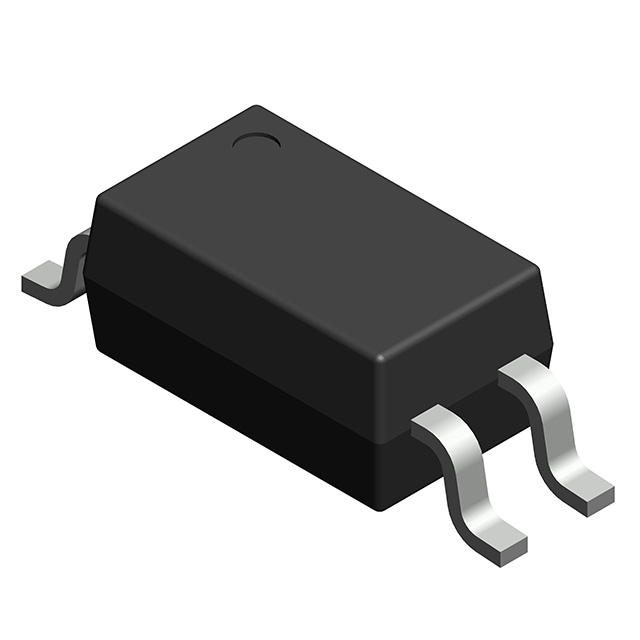
The TCMT1108 is a single-channel transistor output optocoupler manufactured by Vishay Semiconductor Opto Division. It features an NPN phototransistor output with a current transfer ratio ranging from 130% to 260%. The device supports a maximum forward current of 60 mA and offers high isolation voltage capabilities, with datasheets citing either 3750 Vrms or 5000 Vrms depending on the specific revision. Key electrical parameters include a collector-emitter saturation voltage of 300 mV, a maximum collector current of 50 mA, and a collector-emitter voltage rating of 70 V. Operating temperatures span from -40°C to +100°C.
Verify the specific datasheet revision when ordering, as isolation voltage ratings may vary between 3750 Vrms and 5000 Vrms across different production batches. Confirm the package type is SOP-4 and ensure the manufacturer is Vishay Semiconductor Opto Division. Check RoHS compliance status directly on the official product page or datasheet before finalizing procurement decisions.
Select this component when a surface-mount transistor output optocoupler is required for single-channel isolation. Ensure the application demands a current transfer ratio within the 130%-260% range and can accommodate a 60 mA forward current limit. Verify that the SOP-4 footprint fits the PCB layout constraints and that the 70 V collector-emitter voltage rating meets the load requirements.
This part belongs to Vishay's portfolio of discrete semiconductors and optoisolators. It is designed for applications requiring reliable galvanic isolation between low-voltage control circuits and higher-voltage power stages. The TCMT1108 serves as a compact solution for noise reduction and safety separation in modern electronic systems utilizing surface mount technology.
Publicly confirmed substitute part numbers are not available in the provided documentation. Users should consult official cross-reference tools or contact Vishay sales for compatible alternatives based on specific pinout and electrical parameter requirements.
 TCMT1108
The activity of extra discounts on wholesale prices is in full swing…
Please fill in your contact information and we will send you the latest wholesale price list.