 ChipApex | Global Electronic Components Supplier
SEARCH
Search Product
Search Post
— IC芯片 | 连接器 | 传感器 | 被动器件 —
Search productSearch post
— IC芯片 | 连接器 | 传感器 | 被动器件 —
Consult the customer manager about the wholesale price.
consultation hotline:86-132-6715-2157
email:[email protected]
Contact the product manager for consultation. One-stop consultation is available.
Do you want a lower wholesale price? Please send us your inquiry and we will reply immediately.
The TDA2615/N1,112 is a dual power amplifier designed for mains-fed applications like stereo radios and TVs. It delivers 2x6 W output into an 8 Ω load at ±12 V supply with 0.5% THD. The device operates within a ±7.5 to 21 V range and features internal fixed gain of 30 dB. It includes input mute functionality, short-circuit protection, and thermal shutdown above +150 °C. Packaged in a 9-lead SIL9MPF plastic single-in-line medium power package (SOT110-1), it ensures low offset voltage and excellent channel balance.
Verify the specific ordering suffix /N1,112 against current NXP documentation to confirm packaging and compliance status. Ensure the component meets RoHS requirements if applicable to your design constraints. Cross-reference the datasheet revision date to ensure all electrical characteristics align with your system specifications.
Select this amplifier for applications requiring high-fidelity stereo amplification with minimal external component count. It is suitable for designs utilizing symmetrical or asymmetrical power supplies. Consider the thermal resistance requirements when designing heatsinks, as the device provides thermal protection up to +150 °C crystal temperature.
The TDA2615 is part of Philips Semiconductors' (now NXP) line of hi-fi audio power amplifiers. It was originally specified under Philips branding before transitioning to NXP. This series targets consumer electronics requiring reliable, cost-effective audio amplification solutions for mains-powered devices.
The TDA2616 is a similar dual power amplifier offering higher output power. Verify pin compatibility and thermal requirements when considering substitution. Check if the increased power rating and potential differences in mute circuitry align with your specific application needs.
The mute circuit can be activated by applying a current of 300 μA to pin 2 (MUTE). Additionally, the circuit automatically disconnects inputs when the supply voltage drops below ±6 V.
The device features thermal protection that activates at temperatures exceeding +150 °C, allowing for a maximum crystal operating temperature of +150 °C without extra distortion.
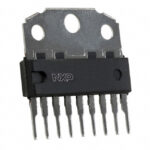 TDA2615/N1,112
The activity of extra discounts on wholesale prices is in full swing…
Please fill in your contact information and we will send you the latest wholesale price list.






