 ChipApex | Global Electronic Components Supplier
SEARCH
Search Product
Search Post
— IC芯片 | 连接器 | 传感器 | 被动器件 —
Search productSearch post
— IC芯片 | 连接器 | 传感器 | 被动器件 —
Consult the customer manager about the wholesale price.
consultation hotline:86-132-6715-2157
email:[email protected]
Contact the product manager for consultation. One-stop consultation is available.
Do you want a lower wholesale price? Please send us your inquiry and we will reply immediately.
The TDA7572 is a highly integrated Class-D mono bridge PWM audio amplifier with an internal step-up converter. It supports 14 V and 42 V automotive buses or split supplies. Key parameters include a 200 W output power, 0.01% THD+N, and a 64-pin HiQUAD package. Operating voltage ranges from 9 V to 58 V. The junction temperature range is -40 °C to 150 °C. Input offset voltage is typically 3 mV.
Verify component authenticity through authorized STMicroelectronics distributors. Confirm the specific revision level matches design requirements. Check datasheet for absolute maximum ratings to ensure safe operating conditions. Validate pin compatibility with existing PCB layouts. Review thermal management guidelines for proper heat dissipation.
Select this component for designs requiring high efficiency and integrated power boosting. Consider the HiQUAD-64 package for thermal performance. Ensure support for I2C configuration if digital control is needed. Evaluate the need for external FETs compatible with the gate drive specifications. Verify supply voltage compatibility with the target application environment.
This device belongs to STMicroelectronics' portfolio of semi-custom switch-mode audio amplifiers. It is designed for versatility in both automotive and consumer sectors. The integration of signal processing and power amplification reduces system complexity. It represents a solution for high-power audio applications requiring compact form factors.
No direct public substitute part numbers are confirmed in the provided documentation. Designers should evaluate functional equivalents based on power rating, package type, and interface compatibility. Consult STMicroelectronics for updated product recommendations if discontinuation is a concern.
It uses adaptive pulse injection to prevent missing pulses due to over-modulation, which maximizes useful output swing.
The device monitors for DC offset, short circuits, open loads, overcurrent, and over-temperature conditions, reporting faults via I2C or dedicated pins.
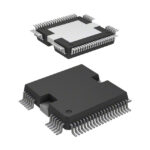 TDA7572
The activity of extra discounts on wholesale prices is in full swing…
Please fill in your contact information and we will send you the latest wholesale price list.





