 ChipApex | Global Electronic Components Supplier
SEARCH
Search Product
Search Post
— IC芯片 | 连接器 | 传感器 | 被动器件 —
Search productSearch post
— IC芯片 | 连接器 | 传感器 | 被动器件 —
Consult the customer manager about the wholesale price.
consultation hotline:86-132-6715-2157
email:[email protected]
Contact the product manager for consultation. One-stop consultation is available.
Do you want a lower wholesale price? Please send us your inquiry and we will reply immediately.
The TDA8552T/N1,512 is a dual-channel audio power amplifier delivering 2 x 1.4 W into an 8 Ω load at 5 V supply. It features Bridge-Tied Load (BTL) architecture with digital volume control and headphone sensing. The device operates on a 2.7 V to 5.5 V supply, drawing 14 mA quiescent current in BTL mode. Gain is selectable via the GAINSEL pin at 20 dB or 30 dB. Volume adjusts in 64 steps using UP/DOWN inputs. Standby current is typically 10 μA. Total harmonic distortion is 0.1% at 0.5 W output.
Verify the specific package variant during procurement. The TDA8552T designation corresponds to the SO20 plastic small outline package. Ensure the ordering suffix matches the required physical footprint for PCB integration. Confirm RoHS compliance status as per the latest manufacturer documentation before finalizing component selection.
Select this component when a dual-channel amplifier with integrated digital volume control is required. The GAINSEL pin allows configuration for either 20 dB or 30 dB maximum gain. Consider the SO20 package thermal characteristics if operating near maximum power dissipation limits. The HPS pin enables automatic mode switching for headphone applications without external logic.
The TDA8552T belongs to the NXP TDA855x series of audio amplifiers. It shares functional similarities with the TDA8551 but offers dual-channel capability. The TDA8552TS variant utilizes a SSOP20 package with different thermal constraints compared to the standard SO20 version. Both variants provide identical electrical performance within their respective thermal limits.
The TDA8552TS serves as a direct package alternative offering identical electrical specifications in a shrink small outline package. Designers must account for the reduced thermal resistance capabilities of the SSOP20 form factor when selecting between these two options.
When a headphone is plugged in, the HPS pin voltage rises to VDD. This triggers the internal logic to switch from BTL mode to Single-Ended (SE) mode, turning off the slave outputs connected to the loudspeakers and reducing quiescent current.
Upon initial connection of the supply voltage, the volume control defaults to an attenuation of 40 dB. Positive pulses must be applied to the UP/DOWN pins to increase the volume to the desired listening level.
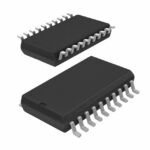 TDA8552T/N1,512
The activity of extra discounts on wholesale prices is in full swing…
Please fill in your contact information and we will send you the latest wholesale price list.





