 ChipApex | Global Electronic Components Supplier
SEARCH
Search Product
Search Post
— IC芯片 | 连接器 | 传感器 | 被动器件 —
Search productSearch post
— IC芯片 | 连接器 | 传感器 | 被动器件 —
Consult the customer manager about the wholesale price.
consultation hotline:86-132-6715-2157
email:[email protected]
Contact the product manager for consultation. One-stop consultation is available.
Do you want a lower wholesale price? Please send us your inquiry and we will reply immediately.
The TDES960RTDR is a quad V3Link deserializer hub manufactured by Texas Instruments, designed for high-speed sensor data aggregation. It features four V3Link receiver ports supporting up to 4.16 Gbps per lane and two MIPI CSI-2 output ports with scalable data rates up to 1.6 Gbps per lane. The device operates within an ambient temperature range of –20°C to +85°C and utilizes a 64-pin VQFN package measuring 9.00 mm × 9.00 mm. Recommended supply voltages include 1.1 V (1.045 V to 1.155 V) for core logic and 1.8 V or 3.3 V for I/O interfaces.
Verify the specific RTDR suffix against the manufacturer's current orderable addendum to confirm packaging type and reel specifications. Ensure that the ordering information matches the exact pin configuration and thermal requirements for the target PCB layout. Cross-reference the datasheet revision history to validate any recent updates to electrical characteristics or register maps before finalizing procurement.
Select this component when designing systems requiring the aggregation of multiple high-resolution camera streams into a single processor interface. It is suitable for applications needing precise multi-camera synchronization and low-latency control channels. Verify compatibility with upstream serializers such as the TSER953 and ensure the downstream processor supports the required MIPI CSI-2 lane configurations and data rates.
The TDES960 belongs to the Texas Instruments V3Link family of serializer/deserializer devices. It functions as a sensor hub, connecting serialized sensor data to downstream processors. This specific model provides a cost-effective solution for space-constrained designs using a compact 64-pin VQFN package while supporting advanced diagnostic and synchronization features.
The DS90UB960WRTDTQ1 is a compatible alternative offering similar deserialization capabilities but includes AEC-Q100 automotive qualification. When substituting, verify differences in operating temperature ranges and power supply requirements to ensure system compatibility.
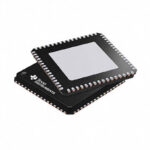 TDES960RTDR
The activity of extra discounts on wholesale prices is in full swing…
Please fill in your contact information and we will send you the latest wholesale price list.





