 ChipApex | Global Electronic Components Supplier
SEARCH
Search Product
Search Post
— IC芯片 | 连接器 | 传感器 | 被动器件 —
Search productSearch post
— IC芯片 | 连接器 | 传感器 | 被动器件 —
Consult the customer manager about the wholesale price.
consultation hotline:86-132-6715-2157
email:[email protected]
Contact the product manager for consultation. One-stop consultation is available.
Do you want a lower wholesale price? Please send us your inquiry and we will reply immediately.
The TDF8546JS/N1,512 is a complementary quad Bridge-Tied Load (BTL) audio power amplifier designed for automotive applications. It operates within a supply voltage range of 6V to 18V and delivers up to 45W per channel into a 4-ohm load. The device utilizes a Silicon-on-Insulator (SOI) based BCD process with a complementary DMOS output stage to ensure robust performance and high sound quality. Key electrical parameters include a maximum operating temperature of 150°C and a minimum operating temperature of -40°C.
Verify the specific suffix N1,512 against official NXP documentation to confirm packaging details and reel specifications. Ensure compatibility with existing I2C bus addresses and voltage levels in the target design. Confirm availability status as product lifecycles may change. Cross-reference the SOI-based BCD process requirements with thermal management strategies for the intended automotive environment.
Select this component for designs requiring four independent audio channels with high efficiency and robust automotive-grade reliability. The integrated I2C diagnostics simplify system monitoring and fault detection. Consider the thermal dissipation benefits of the Best Efficiency Mode when designing heat sinks or PCB layouts. Ensure the application can leverage the low-voltage startup capability if stop/start functionality is required.
The TDF8546 series represents a generation of complementary quad BTL audio power amplifiers optimized for automotive use. Built on an SOI-based BCD process, these devices offer latch-up immunity and excellent channel separation. The TDF8546 specifically targets applications needing high power output with minimal heat generation, leveraging advanced switch techniques to enhance efficiency beyond traditional amplifier designs.
Consult official NXP substitution guides for verified alternatives. Generic replacements may not support the specific I2C diagnostic features or the patented Best Efficiency Mode. Verify pinout compatibility and thermal characteristics before integrating substitute components.
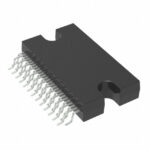 TDF8546JS/N1,512
The activity of extra discounts on wholesale prices is in full swing…
Please fill in your contact information and we will send you the latest wholesale price list.






