 ChipApex | Global Electronic Components Supplier
SEARCH
Search Product
Search Post
— IC芯片 | 连接器 | 传感器 | 被动器件 —
Search productSearch post
— IC芯片 | 连接器 | 传感器 | 被动器件 —
Consult the customer manager about the wholesale price.
consultation hotline:86-132-6715-2157
email:[email protected]
Contact the product manager for consultation. One-stop consultation is available.
Do you want a lower wholesale price? Please send us your inquiry and we will reply immediately.
The TE0729-02-2IF is a System-on-Module (SOM) manufactured by Trenz Electronic GmbH, designed for embedded applications requiring high processing performance. It integrates the Xilinx Zynq-7000 SoC, specifically the Z-7020 variant, which combines dual-core ARM Cortex-A9 processors with programmable logic fabric. The module provides 512 MByte of DDR3 SDRAM and 32 MByte of flash memory for data storage and boot operations. Connectivity features include three Ethernet interfaces, supporting robust network integration in industrial and commercial environments.
Verify the specific revision suffix to ensure compatibility with your carrier board design. Confirm that the integrated Zynq-7020 device grade matches your environmental requirements. Check for any recent Product Change Notifications from Trenz Electronic regarding component substitutions or firmware updates. Ensure your power supply design meets the voltage and current specifications defined in the official datasheet.
Select this module when a combined processor and FPGA solution is required within a compact form factor. It is suitable for designs needing multiple Ethernet ports without external controllers. Consider the thermal dissipation capabilities of your enclosure, as the Zynq-7020 generates significant heat under load. Evaluate if the 512 MB memory limit suffices for your application's real-time operating system and data buffering needs.
This module belongs to the TE0729 family of System-on-Modules from Trenz Electronic. These modules are engineered to simplify the integration of Xilinx Zynq devices into custom hardware. The TE0729 series typically offers various memory configurations and interface options. This specific model focuses on providing balanced performance with standard connectivity options for general-purpose embedded computing tasks.
Direct replacements may include other Trenz Electronic modules based on the same Zynq-7020 chip but with different memory sizes or interface counts. Cross-vendor alternatives would require significant redesign due to the proprietary nature of the SOM form factor and pinout. Verify mechanical dimensions and mounting hole patterns before considering any substitute components.
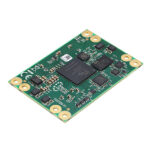 TE0729-02-2IF
The activity of extra discounts on wholesale prices is in full swing…
Please fill in your contact information and we will send you the latest wholesale price list.





