 ChipApex | Global Electronic Components Supplier
SEARCH
Search Product
Search Post
— IC芯片 | 连接器 | 传感器 | 被动器件 —
Search productSearch post
— IC芯片 | 连接器 | 传感器 | 被动器件 —
Consult the customer manager about the wholesale price.
consultation hotline:86-132-6715-2157
email:[email protected]
Contact the product manager for consultation. One-stop consultation is available.
Do you want a lower wholesale price? Please send us your inquiry and we will reply immediately.
The TEA1731LTS/1H is a low-cost switched mode power supply controller IC from the TEA173X series, designed for flyback topologies. It operates in peak current and frequency control mode with integrated slope compensation for continuous conduction mode. The device features frequency jitter to reduce electromagnetic interference and implements dynamic frequency reduction at medium and low output power levels to maintain high efficiency across the total load range. It includes internal overpower protection and accepts an overpower situation for a limited time.
Verify the specific suffix '1H' against official NXP documentation to confirm pinout compatibility and electrical characteristics relative to other variants like '1Z'. Ensure the component meets RoHS compliance requirements for the target market. Confirm availability through authorized distributors as stock levels fluctuate. Validate that the TSOP-6 package matches the PCB footprint design constraints.
Select this controller for designs requiring a balance between cost and efficiency in flyback converters. It is suitable for applications where reducing electromagnetic interference is critical due to its jitter feature. Consider this part when designing for power levels up to 75 W with minimal external components. Evaluate the need for external overtemperature protection implementation based on system thermal constraints.
This component belongs to the TEA173X GreenChip family of SMPS control ICs. These devices are optimized for high efficiency and reliability in consumer and industrial power adapters. The family focuses on simplifying design by minimizing external component count while providing advanced control modes such as peak current and frequency control.
The IC features internal overpower protection (OPP) with an internal time-out. It can accept an overpower situation for a limited amount of time before triggering protection.
The controller implements frequency jitter to spread the switching noise spectrum and reduce electromagnetic interference emissions.
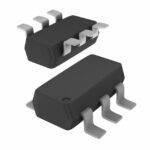 TEA1731LTS/1H
The activity of extra discounts on wholesale prices is in full swing…
Please fill in your contact information and we will send you the latest wholesale price list.





