 ChipApex | Global Electronic Components Supplier
SEARCH
Search Product
Search Post
— IC芯片 | 连接器 | 传感器 | 被动器件 —
Search productSearch post
— IC芯片 | 连接器 | 传感器 | 被动器件 —
Consult the customer manager about the wholesale price.
consultation hotline:86-132-6715-2157
email:[email protected]
Contact the product manager for consultation. One-stop consultation is available.
Do you want a lower wholesale price? Please send us your inquiry and we will reply immediately.
The TEF6890H is a monolithic BiMOS integrated circuit designed as an AM/FM car radio signal processor. It integrates stereo decoding, weak signal processing, and ignition noise blanking for both AM and FM bands. The device includes an RDS/RBDS demodulator that utilizes the tuner IC reference frequency, eliminating the need for an external crystal. Audio processing features comprise an input selector for four sources, tone/volume control with programmable loudness, treble, and bass adjustments, and fader/mute capabilities. Communication is managed via a Fast mode 400 kHz I2C-bus interface.
Verify the specific ordering suffix against the manufacturer's current documentation to confirm package variant and availability status. The component operates within an 8 V to 9 V supply range and requires coupling capacitors for signal inputs and outputs. Ensure compatibility with the host microcontroller's I2C logic levels, which range from 2.5 V to 5 V.
Select this component for applications requiring high integration in automotive radio designs. It supports mixed bus speeds by allowing a gated I2C-bus loop through to the tuner IC. The device offers programmable sensitivity for weak signal detectors and adjustable soft mute slopes. Verify that the system design accommodates the QFP44 package dimensions and thermal requirements for the specified operating temperature range.
The TEF6890H belongs to the NICE family of car radio integrated circuits, originally developed by Philips Semiconductors. It is functionally similar to the TEF6894H but may differ in specific pin configurations or feature sets. Both devices serve as signal processors for AM/FM tuners, handling audio decoding and RDS demodulation within the same product lineage.
The TEF6894H is a related model within the same product family. Cross-reference the datasheet for pin compatibility and functional differences before substitution. No other direct public substitutes are confirmed in the provided documentation.
No, the RDS demodulator uses the reference frequency (75.4 kHz) provided by the tuner IC, so no external crystal is necessary.
The volume control ranges from +20 dB to -59 dB in 1 dB steps. Combined with the loudness control, the overall range extends to -79 dB.
It features fully integrated noise blankers for both bands. In FM mode, it operates as a sample and hold circuit, while in AM mode, it mutes the audio signal during interference pulses detected by a slew rate detector.
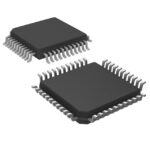 TEF6890H/V2,557
The activity of extra discounts on wholesale prices is in full swing…
Please fill in your contact information and we will send you the latest wholesale price list.





