 ChipApex | Global Electronic Components Supplier
SEARCH
Search Product
Search Post
— IC芯片 | 连接器 | 传感器 | 被动器件 —
Search productSearch post
— IC芯片 | 连接器 | 传感器 | 被动器件 —
Consult the customer manager about the wholesale price.
consultation hotline:86-132-6715-2157
email:[email protected]
Contact the product manager for consultation. One-stop consultation is available.
Do you want a lower wholesale price? Please send us your inquiry and we will reply immediately.
The TFA20C02DBER is a surface-mount RF attenuator manufactured by Ohmite, designed for wireless and radio frequency integrated circuit applications. It utilizes thin film technology to provide precise signal attenuation within the 0805 package footprint. The component operates with a nominal impedance of 50 Ohms and supports frequencies up to 20 GHz. Key electrical specifications include a 2 dB attenuation value and a maximum Voltage Standing Wave Ratio (VSWR) of 1.5. The device is rated for an operating temperature range from -40°C to +125°C, ensuring reliability in demanding environments.
Verify the specific part number suffix against official manufacturer documentation to confirm exact attenuation values and tolerance levels. Ensure that the selected variant matches the required impedance and frequency specifications for the target application. Cross-reference datasheet parameters regarding thermal limits and VSWR ratings prior to integration into final designs.
Select this component based on the required attenuation value and frequency range compatibility. Consider the physical size constraints imposed by the 0805 package when designing PCB layouts. Evaluate the thermal operating range requirements against the specified -40°C to +125°C limits. Confirm impedance matching needs align with the standard 50 Ohm specification provided in the technical data.
This component belongs to the TFA20 series of RF attenuators produced by Ohmite. The series offers various attenuation values within the same 0805 form factor, allowing for consistent design practices across different signal processing requirements. These devices are categorized under wireless and RF integrated circuits, serving as passive components for signal management in high-frequency electronic systems.
Compatible substitutes within the TFA20 series include TFA20C03DBER, TFA20C04DBER, TFA20C08DBER, TFA20C09DBER, and TFA20C10DBER. These alternatives share identical packaging and general electrical characteristics but differ in their specific attenuation values. Verify that the substitute part meets the exact dB requirement of the circuit design.
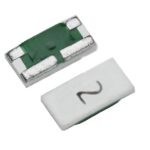 TFA20C02DBER
The activity of extra discounts on wholesale prices is in full swing…
Please fill in your contact information and we will send you the latest wholesale price list.





