 ChipApex | Global Electronic Components Supplier
SEARCH
Search Product
Search Post
— IC芯片 | 连接器 | 传感器 | 被动器件 —
Search productSearch post
— IC芯片 | 连接器 | 传感器 | 被动器件 —
Consult the customer manager about the wholesale price.
consultation hotline:86-132-6715-2157
email:[email protected]
Contact the product manager for consultation. One-stop consultation is available.
Do you want a lower wholesale price? Please send us your inquiry and we will reply immediately.
The TFA9815T/N1,112 is a dual-switching power comparator designed for high-efficiency Class D audio amplifier systems. It integrates two full-bridge Bridge-Tied Load (BTL) power stages, drive logic, protection control logic, and full differential input comparators. The device supports both closed-loop self-oscillating and open-loop configurations. It operates on an asymmetrical supply voltage ranging from 8 V to 20 V. The continuous output power reaches 2 × 17 W in a full-bridge BTL application without requiring an external heat sink.
Verify the specific ordering suffix N1,112 against official documentation to confirm material declaration and environmental compliance status. Confirm package details match the SO32 plastic small outline package with 32 leads. Ensure design requirements align with the asymmetrical supply voltage range of 8 V to 20 V and the thermal characteristics defined for the component.
Select this component for designs requiring a compact stereo Class D amplifier solution without external heatsinking. It is suitable for applications needing either self-oscillating or open-loop control modes via the SO/OL pin configuration. Consider the 8 V to 20 V operating voltage range and the integrated protection features when designing the power supply and load interface circuits.
The TFA9815 serves as a primary building block for stereo high-efficiency Class D audio power amplifier systems. It functions as a dual-switching power comparator containing full-bridge BTL power stages and differential input comparators. This integration allows for the construction of compact digital audio amplifier systems using minimal external components while maintaining high performance and efficiency.
Public confirmed substitute part numbers are not available in the provided documentation.
If the output current exceeds the maximum threshold, the outputs become floating. The device restarts switching automatically after 5 μs once the fault condition is removed, ensuring no audible interruptions during normal operation.
The configuration is determined by the SO/OL pin. Connecting it to VSSD(HW) enables self-oscillating configuration, while leaving it floating enables open-loop configuration.
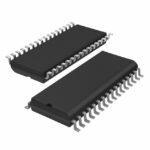 TFA9815T/N1,112
The activity of extra discounts on wholesale prices is in full swing…
Please fill in your contact information and we will send you the latest wholesale price list.






