 ChipApex | Global Electronic Components Supplier
SEARCH
Search Product
Search Post
— IC芯片 | 连接器 | 传感器 | 被动器件 —
Search productSearch post
— IC芯片 | 连接器 | 传感器 | 被动器件 —
Consult the customer manager about the wholesale price.
consultation hotline:86-132-6715-2157
email:[email protected]
Contact the product manager for consultation. One-stop consultation is available.
Do you want a lower wholesale price? Please send us your inquiry and we will reply immediately.
The TGMR-Q450V8LFTR is a pulse transformer isolation module manufactured by HALO Electronics, Inc. Designed for surface mount technology (SMD) with a gull-wing package, this component features an 8-pin configuration. It provides a voltage-time product of 22 V/us and supports an insulation voltage of 4.5 kVrms. The device operates within a temperature range of -40°C to +125°C. It is part of the DCDC-SMD series, intended for high-reliability applications requiring galvanic isolation in power conversion circuits.
Verify the specific suffix Q450 against official HALO Electronics documentation to confirm insulation voltage and electrical characteristics match project requirements. Ensure the SMD gull-wing footprint dimensions align with the PCB layout. Confirm RoHS compliance status through the latest datasheet revision. Validate that the operating temperature range meets the environmental conditions of the final application. Cross-reference the manufacturer part number with authorized distributors to ensure authenticity.
Select this component when high-voltage isolation is required in compact surface-mount designs. Consider the 8-pin gull-wing form factor for board space constraints. Evaluate the 22 V/us voltage-time product against the transformer duty cycle requirements. Ensure the thermal performance supports the maximum operating temperature of +125°C. Compare alternative models in the DCDC-SMD series if different pin counts or insulation levels are needed.
This part belongs to the HALO Electronics TGMR series of isolated pulse transformers. These components are engineered for robust performance in power electronics. The series offers various insulation voltages and pin configurations to suit diverse isolation needs. The TGMR-Q450V8LFTR specifically targets applications requiring 4.5 kVrms isolation in a small outline package format.
Consult HALO Electronics official substitution guides for direct replacements. Verify equivalent insulation voltage and package dimensions before swapping. Check compatibility with existing PCB footprints and assembly processes. Ensure electrical parameters such as voltage-time product remain within acceptable limits for the target circuit.
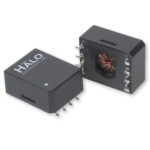 TGMR-Q450V8LFTR
The activity of extra discounts on wholesale prices is in full swing…
Please fill in your contact information and we will send you the latest wholesale price list.






