 ChipApex | Global Electronic Components Supplier
SEARCH
Search Product
Search Post
— IC芯片 | 连接器 | 传感器 | 被动器件 —
Search productSearch post
— IC芯片 | 连接器 | 传感器 | 被动器件 —
Consult the customer manager about the wholesale price.
consultation hotline:86-132-6715-2157
email:[email protected]
Contact the product manager for consultation. One-stop consultation is available.
Do you want a lower wholesale price? Please send us your inquiry and we will reply immediately.
The THC63LVD827-B is a dual-link LVDS transmitter manufactured by THine Solutions, Inc., designed for high-resolution video transmission between host systems and flat panel displays. It converts 27-bit CMOS/TTL data (RGB 8-bit plus Hsync, Vsync, DE) into LVDS streams. The device supports resolutions up to 1080p/1920x1440. In dual LVDS output mode, it operates at an LVDS clock frequency of 87MHz, transmitting 51 bits of RGB data per channel with an effective rate of 609Mbps. In single LVDS output mode, the clock frequency reaches 174MHz, transmitting 27 bits of RGB data per channel at an effective rate of 1218Mbps. It features a low-power 1.8V CMOS design and accepts 1.8V/2.5V/3.3V TTL/CMOS inputs.
Verify the specific suffix 'B' against the manufacturer's official datasheet to confirm pinout and electrical parameter equivalence with the base model. Ensure compatibility with the target PCB layout, specifically the 7mm x 7mm TFBGA package with 0.65mm pitch, which requires non-HDI board capabilities. Confirm RoHS compliance status through official documentation before integration.
Select this component when dual-link LVDS transmission is required for resolutions exceeding standard single-link limits. Consider the 1.8V single power supply requirement and the flexibility for 1.8V/2.5V/3.3V input levels. Evaluate the need for programmable clock edges and EMI reduction features. Ensure the design supports the specific TFBGA footprint and thermal requirements associated with the 72-pin package.
This part belongs to the THine Solutions LVDS transmitter family, specifically engineered for video interface applications. It complements receiver counterparts like the THC63LVDR84C series. The product line focuses on simplifying PCB layout through flexible input/output modes and integrated clock management, targeting consumer electronics and professional display markets.
Publicly confirmed substitute part numbers are not available in the provided source material. Verify functional equivalence carefully if considering alternative transmitters from other manufacturers, as pinouts and electrical characteristics may differ significantly.
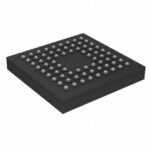 THC63LVD827-B
The activity of extra discounts on wholesale prices is in full swing…
Please fill in your contact information and we will send you the latest wholesale price list.






