 ChipApex | Global Electronic Components Supplier
SEARCH
Search Product
Search Post
— IC芯片 | 连接器 | 传感器 | 被动器件 —
Search productSearch post
— IC芯片 | 连接器 | 传感器 | 被动器件 —
Consult the customer manager about the wholesale price.
consultation hotline:86-132-6715-2157
email:[email protected]
Contact the product manager for consultation. One-stop consultation is available.
Do you want a lower wholesale price? Please send us your inquiry and we will reply immediately.
The THC63LVDM83C-5S-B is a single LVDS transmitter manufactured by CEL, designed for host-to-LCD panel interfaces. It converts parallel CMOS/TTL data into four differential LVDS output channels. The device supports pixel clock frequencies ranging from 8 MHz to 160 MHz, accommodating resolutions up to SXGA+ (1400x1050). It accepts 28-bit input data, comprising 24 bits of color information and 4 bits of control signals. The component operates on a single 3.3V power supply with a maximum power dissipation of 1.8 W. It utilizes a 56-pin TSSOP surface-mount package and includes an internal PLL, eliminating the need for external timing components.
Verify the manufacturer designation carefully, as this part number appears in catalogs listing both THine Electronics and CEL. Confirm that the specific suffix '-B' corresponds to the intended packaging or revision level required for your assembly process. Ensure compatibility with the corresponding deserializer, such as the THC63LVDR84B series, for complete link functionality.
Select this component when a single-link LVDS solution is required for displays supporting up to 160 MHz pixel clocks. It is suitable for designs needing a compact 56-pin TSSOP footprint. Verify that the system design can accommodate the 3.3V logic levels and that the EMI constraints justify the use of the reduced swing feature if implemented.
This device belongs to the THC63LVDM83 family of LVDS transmitters. It serves as the transmitting counterpart to receivers like the THC63LVDR84C. The 'C' variant typically denotes standard swing operation, while the '-5S' indicates a specific tape-and-reel packaging format. The '-B' suffix may denote a specific manufacturing batch or minor revision within the CEL distribution channel.
Pin-compatible alternatives include the THC63LVDM83D and THC63LVDM83R from THine Electronics. Other compatible serializers include the GM8283C from Guotong and the SN75LVDS83 from Texas Instruments. Verify electrical specifications and pin assignments before substitution.
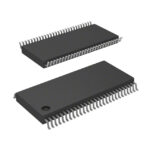 THC63LVDM83C-5S-B
The activity of extra discounts on wholesale prices is in full swing…
Please fill in your contact information and we will send you the latest wholesale price list.





