 ChipApex | Global Electronic Components Supplier
SEARCH
Search Product
Search Post
— IC芯片 | 连接器 | 传感器 | 被动器件 —
Search productSearch post
— IC芯片 | 连接器 | 传感器 | 被动器件 —
Consult the customer manager about the wholesale price.
consultation hotline:86-132-6715-2157
email:[email protected]
Contact the product manager for consultation. One-stop consultation is available.
Do you want a lower wholesale price? Please send us your inquiry and we will reply immediately.
The THS7368IPWR is a six-channel video amplifier manufactured by Texas Instruments. It integrates three standard-definition and three full-definition filters within a single package, providing flexible signal conditioning for multi-format video applications. The device operates on a single supply voltage ranging from 2.6 V to 5.5 V and draws a typical operating current of 16.2 mA. It features a 72 MHz bandwidth and supports a maximum output current of 90 mA per channel. Housed in a 20-pin TSSOP package, it functions as an integrated filter amplifier suitable for surface-mount assembly across industrial temperature ranges.
Verify the specific suffix against official Texas Instruments documentation to confirm package type and tape-and-reel specifications. Ensure compatibility with required thermal management standards for the target application environment. Cross-reference the manufacturer part number with authorized distributor catalogs to validate authenticity and traceability before finalizing procurement orders.
Select this component when designing circuits requiring multiple video channels with distinct SD and HD filtering requirements. Evaluate the 72 MHz bandwidth against the highest frequency components of the input video signal. Confirm that the 20-TSSOP footprint aligns with the printed circuit board layout constraints and that the 5.5 V maximum supply rating matches the system power architecture.
This device belongs to the THS73xx series of integrated filter amplifiers designed for high-performance video signal processing. It addresses the need for compact solutions in multi-channel video routing where separate filter stages would otherwise increase board space and complexity. The integration of both SD and HD filters allows for unified hardware designs across varying video resolution standards.
Consult official Texas Instruments substitution guides for verified alternatives. Consider the THS7364IPWR for similar six-channel architectures with comparable filtering options. Verify pinout compatibility and electrical parameter alignment before implementing any substitute components in existing designs.
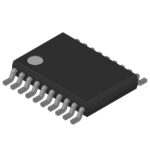 THS7368IPWR
The activity of extra discounts on wholesale prices is in full swing…
Please fill in your contact information and we will send you the latest wholesale price list.







