 ChipApex | Global Electronic Components Supplier
SEARCH
Search Product
Search Post
— IC芯片 | 连接器 | 传感器 | 被动器件 —
Search productSearch post
— IC芯片 | 连接器 | 传感器 | 被动器件 —
Consult the customer manager about the wholesale price.
consultation hotline:86-132-6715-2157
email:[email protected]
Contact the product manager for consultation. One-stop consultation is available.
Do you want a lower wholesale price? Please send us your inquiry and we will reply immediately.
The TIL196BG is a quad optocoupler featuring four independent channels within a single 16-pin DIP package. It utilizes an AC input LED configuration with two infrared LEDs connected in inverse parallel to enable direct drive from alternating current sources without external rectification. The output side employs phototransistors for signal isolation. Key electrical parameters include a maximum forward voltage of 1.4V, a typical rise time of 100µs, and a typical fall time of 100µs. The device supports a maximum input current of 50mA and provides an isolation voltage of 5300Vrms. Current transfer ratios range from 500% minimum to 7500% maximum.
Verify the specific suffix designation against official Isocom documentation to confirm pinout compatibility and packaging type. Ensure that the AC input requirement aligns with the internal LED structure. Confirm that the operating temperature range meets system specifications. Cross-reference the isolation voltage ratings with safety standards applicable to the end equipment. Validate that the current transfer ratio meets the load requirements of the destination circuit.
Select this component when multiple isolated channels are required in a compact footprint. The AC input feature simplifies circuit design by eliminating external diodes for rectification. Consider the 100µs switching speed for applications not requiring high-frequency operation. Evaluate the 5300Vrms isolation barrier for safety-critical interfaces. Compare the current transfer ratio against the driving capability of the source logic.
Isocom Components specializes in optocouplers and photoelectric switches, offering alternatives to discontinued industry-standard devices. The company maintains manufacturing capabilities in Malaysia and testing facilities in the UK. Their product line includes various channel configurations and output types designed for commercial and industrial applications.
Publicly confirmed substitute part numbers are not available in the provided documentation. Verify pin-to-pin compatibility and electrical parameter equivalence before substituting with generic equivalents.
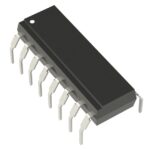 TIL196BG
The activity of extra discounts on wholesale prices is in full swing…
Please fill in your contact information and we will send you the latest wholesale price list.





