 ChipApex | Global Electronic Components Supplier
SEARCH
Search Product
Search Post
— IC芯片 | 连接器 | 传感器 | 被动器件 —
Search productSearch post
— IC芯片 | 连接器 | 传感器 | 被动器件 —
Consult the customer manager about the wholesale price.
consultation hotline:86-132-6715-2157
email:[email protected]
Contact the product manager for consultation. One-stop consultation is available.
Do you want a lower wholesale price? Please send us your inquiry and we will reply immediately.
The TIL198BG is a high-speed optocoupler featuring an AlGaAs infrared LED coupled to a phototransistor output. It provides electrical isolation between input and output circuits while transmitting digital signals. The device is housed in a standard DIP-6 package, suitable for through-hole mounting on printed circuit boards. Key electrical characteristics include a high current transfer ratio and fast switching times, making it appropriate for applications requiring reliable signal transmission across isolated domains with minimal propagation delay.
Verify the specific suffix 'BG' against manufacturer documentation to confirm exact binning or testing criteria. Ensure compatibility with standard DIP-6 footprints during PCB design. Cross-reference datasheet specifications for absolute maximum ratings to prevent operational failure. Confirm availability of official test reports if required for quality assurance protocols in your specific application domain.
Choose this component when high-speed digital isolation is required within a DIP-6 form factor. Evaluate the current transfer ratio requirements against your load conditions. Consider the operating temperature range specified in the datasheet relative to your environmental constraints. Compare propagation delays with other optocouplers if timing sensitivity is critical for your system architecture.
Isocom Components manufactures the TIL198BG as part of its optoelectronic portfolio. This series typically includes various optocoupler variants designed for different speed and isolation requirements. The TIL198 variant specifically targets applications needing faster response times compared to standard general-purpose optocouplers, leveraging advanced semiconductor materials for improved performance metrics.
Consult official substitution lists for equivalent high-speed DIP-6 optocouplers. Verify pinout compatibility before replacing to avoid circuit damage. Check that replacement devices meet or exceed the original current transfer ratio and isolation voltage specifications. Ensure thermal characteristics align with your existing heat dissipation strategy.
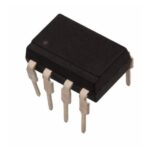 TIL198BG
The activity of extra discounts on wholesale prices is in full swing…
Please fill in your contact information and we will send you the latest wholesale price list.







