ChipApex | Global Electronic Components Supplier

SEARCH
Search Product
Search Post
Search productSearch post
Consult the customer manager about the wholesale price.
consultation hotline:86-132-6715-2157
email:[email protected]
Contact the product manager for consultation. One-stop consultation is available.
Do you want a lower wholesale price? Please send us your inquiry and we will reply immediately.
TL072BIYDT is listed in the Instrumentation, Op Amps, Buffer Amps range at ChipApex. The manufacturer field lists STMicroelectronics. Its product description is IC OPAMP JFET 2 CIRCUIT 8SOIC. Review the specifications below when checking this part for your BOM.
The TL072BIYDT is a dual JFET-input operational amplifier from STMicroelectronics, housed in an 8-SOIC surface-mount package. It features a gain-bandwidth product of 4 MHz and a slew rate of 16 V/µs. The device operates on supply voltages ranging from 3 V to 36 V DC. Key electrical specifications include an input bias current of 20 pA, input offset voltage of 3 mV, and input voltage noise density of 15 nV/√Hz. It supports output currents up to 40 mA per channel with a common-mode rejection ratio of 80 dB.
Verify the specific suffix 'IY' against the manufacturer's official datasheet to confirm pinout compatibility and thermal characteristics. Ensure the selected component meets the required industrial temperature range specifications. Cross-reference the ordering part number with the latest STMicroelectronics documentation to avoid discrepancies in package dimensions or material declarations.
Select this component when a dual-channel configuration with JFET inputs is required for high-impedance applications. Consider the 8-SOIC package for surface-mount assembly constraints. Evaluate the 4 MHz bandwidth and 16 V/µs slew rate against signal frequency requirements. Compare power consumption and noise specifications with alternative op-amps if lower quiescent current is critical.
This device belongs to the TL072 family of high-speed JFET input dual operational amplifiers. It shares architectural similarities with the single-channel TL071 and quad-channel TL074 variants. The 'B' grade typically indicates tighter performance tolerances compared to standard grades. The 'IY' suffix denotes specific packaging and tape-and-reel configurations for automated assembly.
Compatible substitutes include the TL072CDT and TL072IDT from STMicroelectronics, which share the same functional architecture and pinout. Other generic JFET-input dual op-amps may serve as alternatives if pin compatibility and electrical parameters align with the design requirements.
Explore related parts through Amplifiers, Linear, Integrated Circuits (ICs), all product categories.
STMicroelectronics TL072BIYDT is typically reviewed in Instrumentation, Op Amps, Buffer Amps category where bandwidth, stability, and recovery behavior need to be checked with the real source, load, and feedback network. Key specs include Description (IC OPAMP JFET 2 CIRCUIT 8SOIC), Temperature (-40°C ~ 125°C), Package/case (8-SOIC (0.154", 3.90mm Width)), and Mounting (Surface Mount). On the assembled product, teams usually come back to bandwidth (4 MHz) and channels (2) before they treat the part as approved.
What Qualification is listed for TL072BIYDT?
AEC-Q100
What Current - Output / Channel does TL072BIYDT have?
40 mA
Can you confirm the packaging for TL072BIYDT?
Tape & Reel (TR), Cut Tape (CT)
What Grade does TL072BIYDT have?
Automotive
When STMicroelectronics TL072BIYDT is used in Instrumentation, Op Amps, Buffer Amps designs, teams typically start by confirming interfaces, supply rails, operating envelope, and the pass or fail checks that will govern release. On released hardware, teams usually recheck bandwidth (4 MHz), channels (2), and package/case (8-SOIC (0.154", 3.90mm Width)) first. Signal-chain validation needs to include interface timing, loading, and grounding checks because analog performance is usually lost after assembly rather than on the schematic. In real deployments, on the assembled PCB, performance is set by the whole chain together: references, filtering, layout coupling, and the real source/load impedance in the system. In medical instruments, low-drift in-amps condition biopotential and low-level sensor signals where noise and offset stability dominate the error budget. In many systems, the cost is in integration and validation, so reducing uncertainty is the real win.
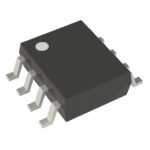 TL072BIYDT

The activity of extra discounts on wholesale prices is in full swing…
Please fill in your contact information and we will send you the latest wholesale price list.