 ChipApex | Global Electronic Components Supplier
SEARCH
Search Product
Search Post
— IC芯片 | 连接器 | 传感器 | 被动器件 —
Search productSearch post
— IC芯片 | 连接器 | 传感器 | 被动器件 —
Consult the customer manager about the wholesale price.
consultation hotline:86-132-6715-2157
email:[email protected]
Contact the product manager for consultation. One-stop consultation is available.
Do you want a lower wholesale price? Please send us your inquiry and we will reply immediately.
The TL1431QDR is a precision programmable shunt reference in an SOIC-8 package. It features a 0.4% initial voltage tolerance and operates over the automotive temperature range of -40°C to +125°C. The output voltage is adjustable from approximately 2.5V to 36V using two external resistors. Key electrical specifications include a maximum cathode current of 100mA, a minimum regulation current of 1mA, and a typical output impedance of 0.2Ω.
Verify the specific suffix 'QDR' corresponds to the automotive grade (TL1431Q) variant characterized for -40°C to +125°C operation. Confirm the SOIC-8 package type matches the design requirements. Ensure the ordering information aligns with the manufacturer's current production data sheet for the TL1431 series.
Select this component when automotive-grade thermal stability is required alongside high initial accuracy. The device supports cathode currents up to 100mA, making it suitable for driving loads directly. Verify that the application requires an adjustable shunt regulator rather than a fixed reference. Consider the fast turn-on speed for clamp applications.
The TL1431 is part of Texas Instruments' precision programmable reference family. It integrates an accurate voltage reference and an operational amplifier to function as a single voltage reference, error amplifier, or comparator. The Q-series variants are specifically designed for automotive environments, ensuring reliability under varying thermal conditions.
The TL1431QDREP is a military-enhanced version of the same functional device. Other variants within the TL1431 family include the commercial TL1431C and the standard TL1431. Substitution should account for the specific temperature range and tolerance requirements of the target application.
The device requires a minimum cathode current of 1mA to maintain proper regulation and linear operation.
The output voltage is set between 2.5V and 36V by connecting two external resistors in a voltage divider configuration between the cathode and anode, with the midpoint connected to the reference pin.
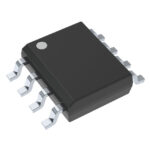 TL1431QDR
The activity of extra discounts on wholesale prices is in full swing…
Please fill in your contact information and we will send you the latest wholesale price list.






